2026-10-14
Breast Augmentation Types: Is It Just About the Implant? A Look at Motiva Preserve and the Full Surgical Process
A guide to breast augmentation types that looks beyond implant selection, covering the Motiva Preserve surgical process, recovery care, and risks to consider.
Breast Augmentation Types: Is It Just About the Implant? A Look at Motiva Preserve and the Full Surgical Process

While researching breast augmentation, you'll find there are more things to consider than you might expect.
You'll start weighing the implant's size and shape, how it will feel, and whether it can create the silhouette you're after, one thing at a time.
But there's another factor to examine just as closely as implant selection: how the space for the implant is created, and how the surrounding tissue is taken into account.
When comparing types of breast augmentation, it's easy to focus first on the features of the implant, but the surgical process is also worth a close look.
If you're curious about Motiva Preserve, let's go through its features step by step.
What Matters as Much as Shape
The breast contains several structures, including muscle, glandular tissue, and the nerves responsible for sensation.
Alongside the size and shape you want, you also need to assess the condition of the surrounding tissue.
Motiva Preserve is a technique that focuses on considering and preserving the surrounding tissue during surgery.
That said, even with tissue preservation in mind, tissue damage or changes in sensation can still occur, so it's important to understand that results can differ depending on each person's physical condition and surgical plan.
A Different Approach Starts with Space
How the space for the implant is formed is also an important point when examining the characteristics of a surgical method.
The plan for creating that space can also change depending on the existing breast shape and tissue condition.
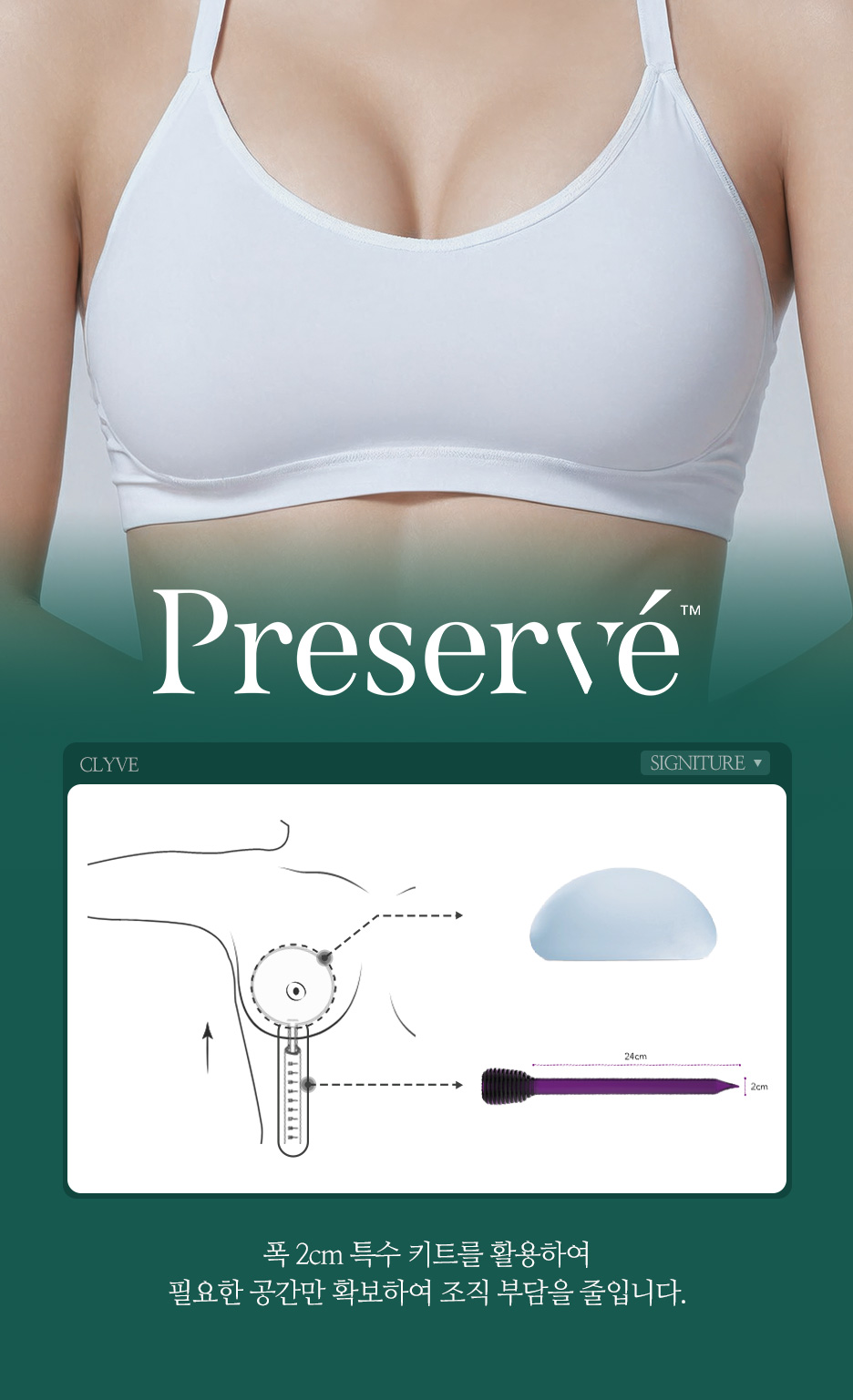
Motiva Preserve uses a specialized instrument to create the space.
The instrument's width is listed as 2 cm, but this is a different concept from the actual length of the skin incision.
The location and size of the incision can change depending on the surgical plan, so it's best to understand these as two separate things.
3 Key Points of Preserve
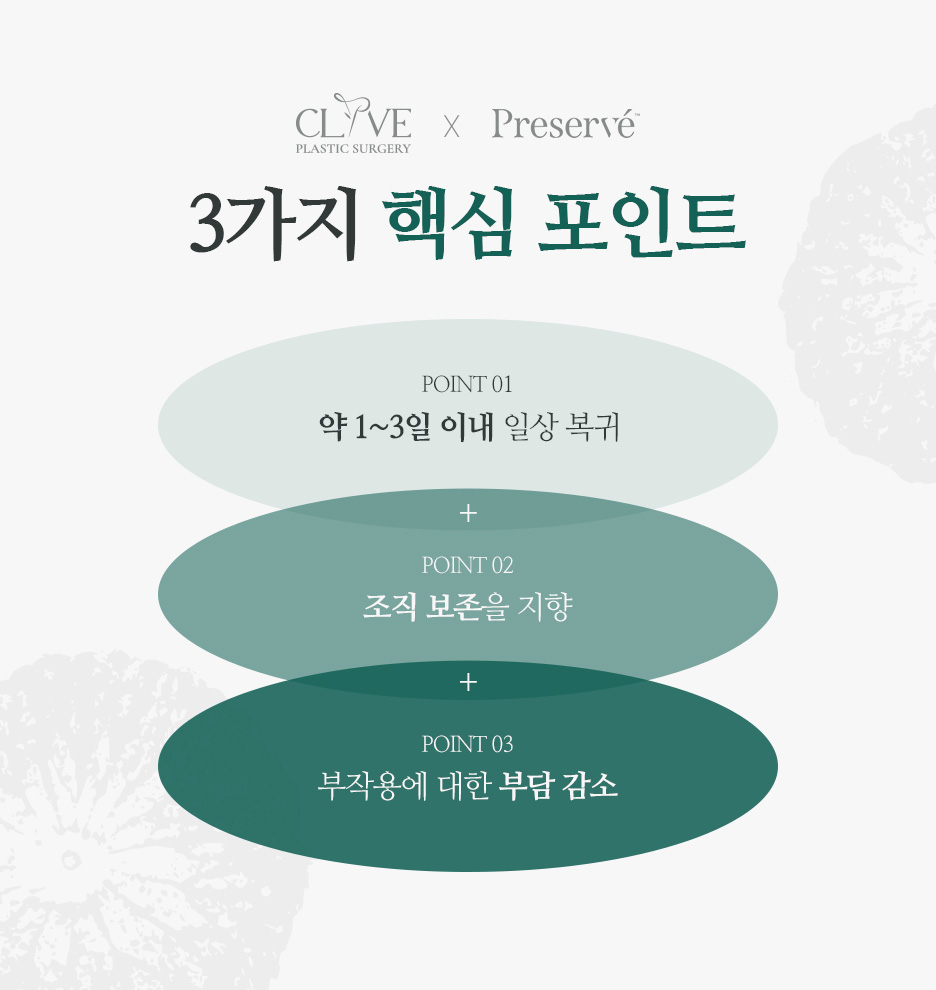
When comparing types of breast augmentation, it's worth considering three things together: returning to daily life, tissue preservation, and the risks that come with surgery.
First, regarding recovery time, a period of roughly 1 to 3 days is sometimes cited. However, this is not a standard that applies equally to everyone. The point at which you can return to daily life depends on the extent of surgery and your recovery, and when you can resume exercise or other physical activity should be confirmed separately.
The approach of considering surrounding tissue is also worth examining. However, that doesn't mean surgical risks disappear.
Bleeding, infection, and changes in sensation are all possible, so it's wise to check the limitations of the procedure and its precautions, not just the benefits you're hoping for.
Differences in Before-and-After Photos
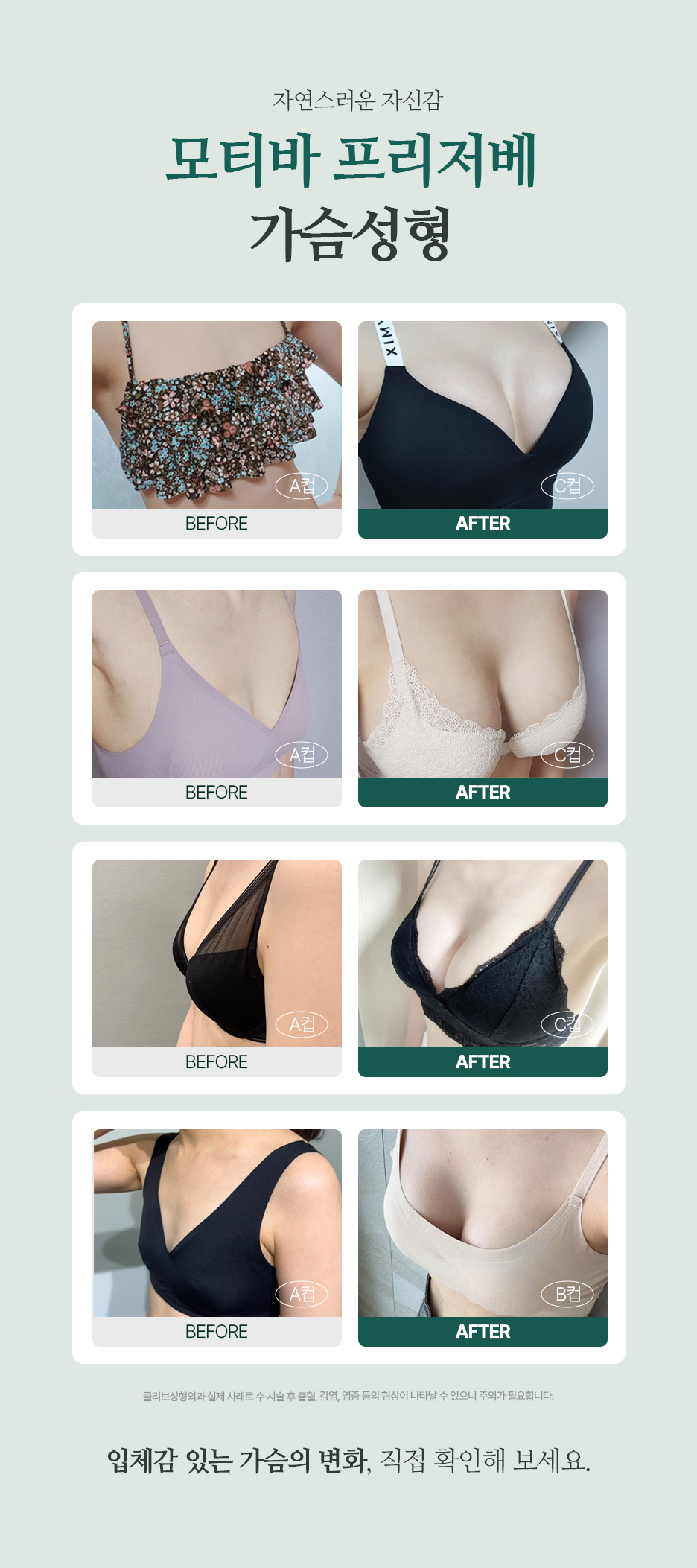
When comparing types of breast augmentation, before-and-after photos can help you picture the shape you want in more concrete terms.
When looking at them, pay attention not only to changes in volume but also to overall proportions, left-right balance, and the underside contour of the breast.
Results of Motiva Breast Augmentation can also vary depending on the breast shape before surgery, skin elasticity, rib cage structure, and the size and position of the implant. Even with the same implant, the silhouette can differ depending on body type and tissue condition.
Rather than using photos to predict exact results, it's best to use them as a reference for clarifying the direction you want.
Don't Forget Recovery Care!
It's also helpful to check ahead of time what kind of aftercare is provided following surgery.
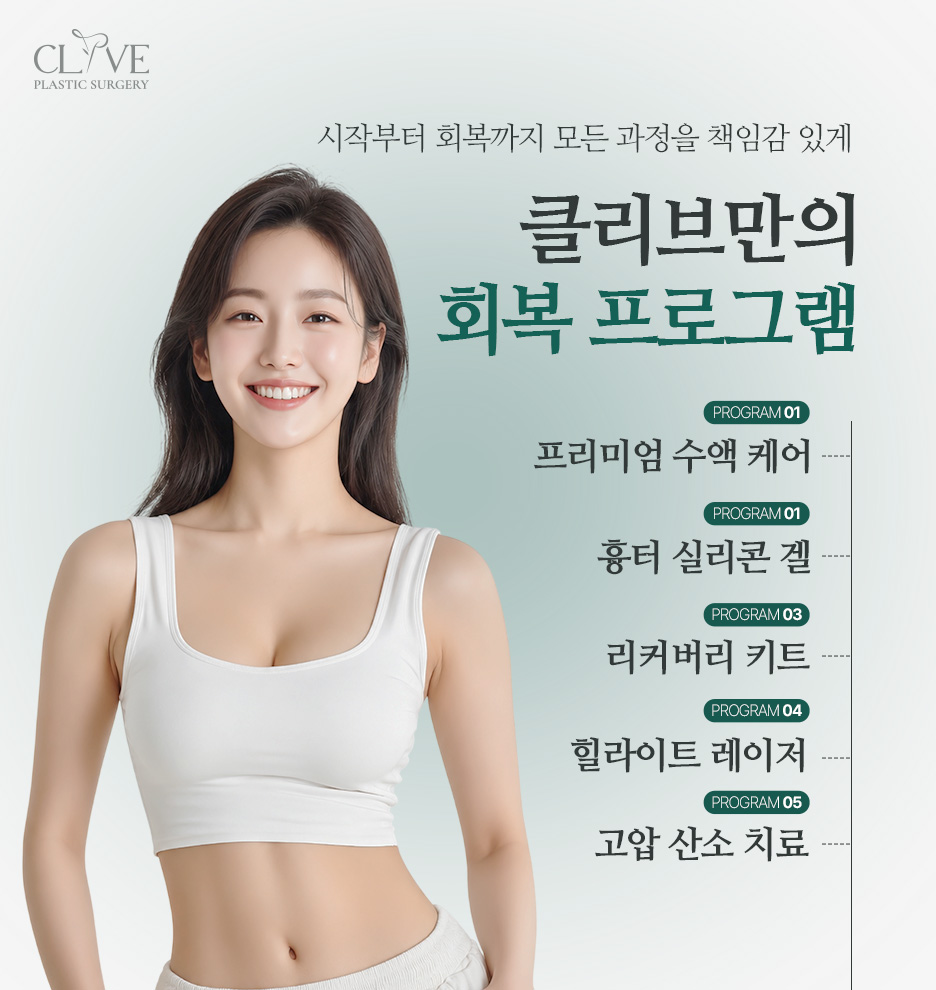
Recovery programs may include IV fluid care, silicone gel for scar management, and recovery kits, and laser treatment or hyperbaric oxygen therapy may be performed alongside them.
However, each aftercare item may have a different purpose and target group, so in addition to knowing what care is offered, it's important to confirm which care you need and when it should be done.
After surgery, follow the instructions you've been given, and if you notice symptoms that differ from usual, get them properly checked.
From Surgery to Recovery
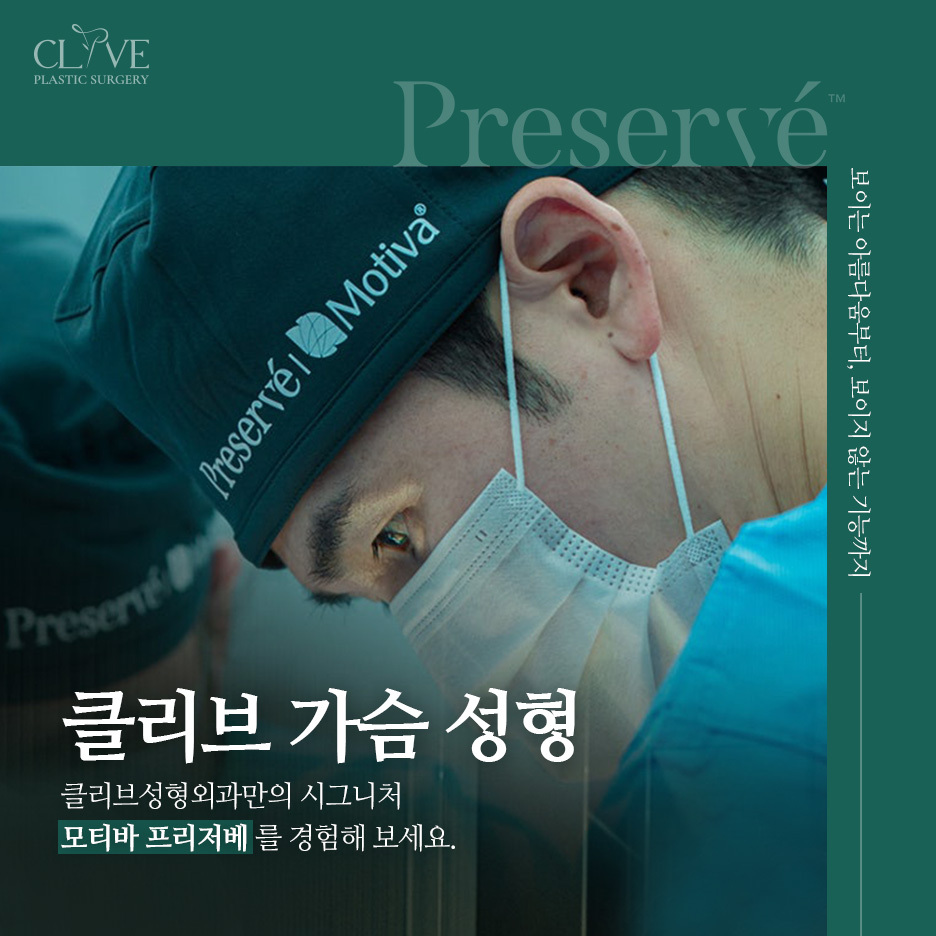
Motiva Breast Augmentation is a process that requires considering not only implant selection, but also the surgical procedure and recovery.
If you're looking into Motiva Breast Augmentation, take a look at how surrounding tissue is considered, how the space is created, and the aftercare that follows surgery.
When comparing types of breast augmentation, it's best to make your decision only after thoroughly reviewing your own physical condition, the shape you want, and the precautions that come with surgery!















Frequently Asked Questions
What are the features of Motiva Preserve?
It is a technique that focuses on considering and preserving the surrounding tissue during surgery. A specialized instrument is used to create the space, and it's worth looking at the surgical process as well as implant selection.
How long is the recovery period for Motiva Preserve?
Sometimes a recovery period of about 1 to 3 days is cited, but this is not a standard that applies to everyone. The time to return to daily life can vary depending on the extent of surgery and recovery, and the timing for resuming physical activity such as exercise should be confirmed separately.
What kind of recovery care is provided after surgery?
Recovery programs may include IV fluid care, silicone gel for scar management, and a recovery kit. Laser treatment or hyperbaric oxygen therapy may also be performed alongside them. Since each aftercare item may have a different purpose and target, it's a good idea to confirm which care you need and when it will be done.
How should you look at breast augmentation before-and-after photos?
Before-and-after photos are best used as a reference for picturing the shape you want. Look at overall proportion, left-right balance, and the underside contour of the breast, not just volume changes. Keep in mind that results can vary depending on body type and tissue condition.
What risks come with surgery?
Bleeding, infection, and changes in sensation are possible. Even with an approach that considers surrounding tissue, surgical risks don't disappear, so it's wise to review the limitations of the procedure and its precautions alongside the benefits you're hoping for.
Is the 2 cm width of the special instrument the length of the skin incision?
No. The 2 cm width of the instrument is a different concept from the actual length of the skin incision. The location and size of the incision can vary depending on the surgical plan, so it's best to understand the two as separate things.
Clinic Info
Details
- 서울 강남구 도산대로 121 YK타워 5·6층
- 02-6212-8080
- Mon-Fri 10:00-19:00Sat 10:00-17:00 Closed days calendar ›
- Director 송경호
- clyveps.com