2026-10-06
Considering Apgujeong Eye Revision Surgery? What to Check Before Lower-Lid Canthoplasty or Revision Incision Double Eyelid Surgery
A guide to Apgujeong eye revision surgery covering double eyelid line types, non-incision vs. incision methods, and key checks before lower-lid canthoplasty.

Considering Apgujeong Eye Revision Surgery? What to Check Before Lower-Lid Canthoplasty or Revision Incision Double Eyelid Surgery

Looking into eye surgery again after having it done once brings more worries than the first time.
The first time, I was just a bit unhappy with my double eyelid line. But when you start researching again, there's a lot to sort through, from whether you want an in-line or in-out line to whether a non-incision or incision method is better.
Also, if you've already had eye surgery, you need to approach it differently than you did the first time. You have to check the current condition of your eyes and which method was used in the previous surgery.
So today, I'll walk through everything from double eyelid line types to surgical methods, and go over what to look for if you're considering lower-lid canthoplasty or revision incision double eyelid surgery.
Double eyelid lines come in more types than you might think
As you research double eyelids, you'll often hear terms like in-line, in-out line, semi-outline, and outline. Just from the names, it's easy to get confused about what's what.
The easiest way to tell them apart is to look at how the double eyelid line starts at the inner corner of the eye.
Some lines begin so faintly at the inner corner that they're barely visible, while others become more prominent as they move toward the outer corner.
Because of these differences, even within the same double eyelid type, the look can vary depending on where the line begins.
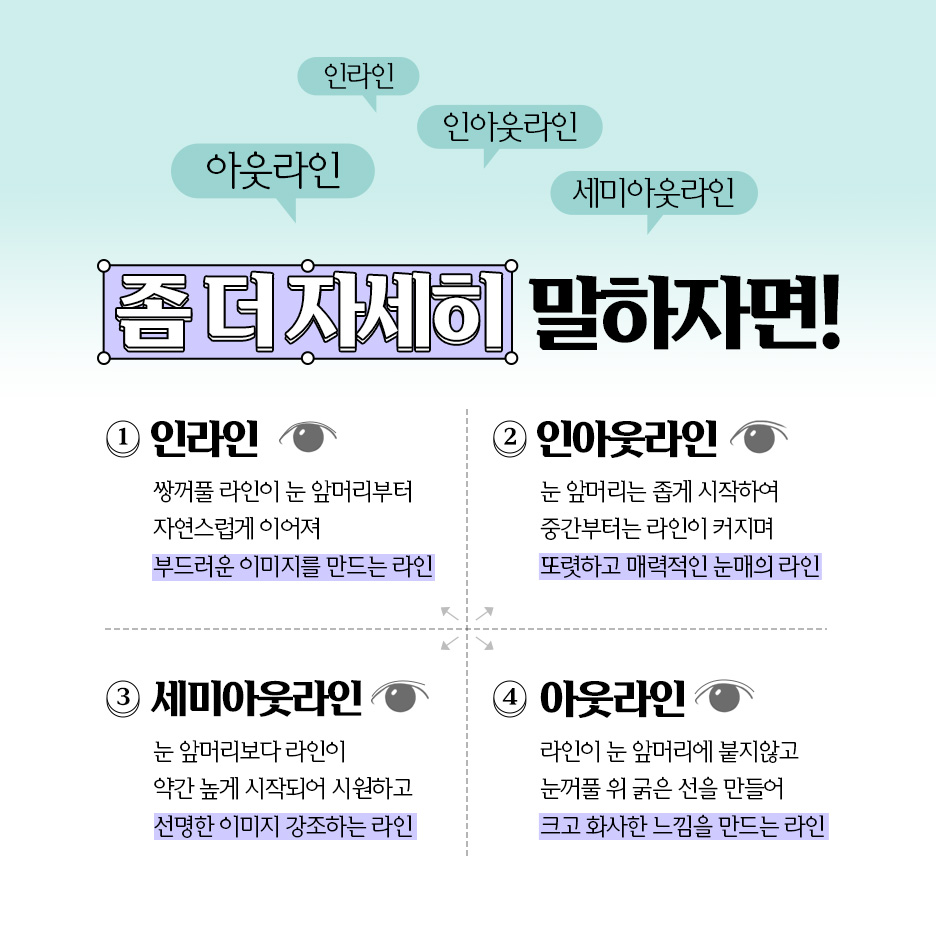
In the end, the difference shows in the “starting point”
An in-line is a style where the double eyelid line flows naturally from the inner corner of the eye.
An in-out line starts relatively narrow at the inner corner and becomes visible partway along. As you move toward semi-outline or outline, the starting point shifts gradually.
Looking at it this way, it's much easier to focus on where the line starts than on its name.
That said, even with the same in-line type, how it actually looks can differ depending on eye shape, eyelid thickness, and the shape of the inner corner.
So when comparing double eyelid lines, it's better not to rely on names alone. Also check how far the line actually shows on your own eyes.

If you have an eye shape you like, start here
While browsing the internet or social media, you'll naturally collect photos of eyes you wish you had.
Showing these photos during a consultation is perfectly fine. It makes it much easier to explain the direction you want.
However, rather than copying a photo exactly, think about what specifically appealed to you.
What you discuss may change depending on whether you like the height of the double eyelid line or the shape where it begins at the inner corner.
Especially for lower-lid canthoplasty, since you already have an existing line, it helps to explain which parts of your current line you want to change.
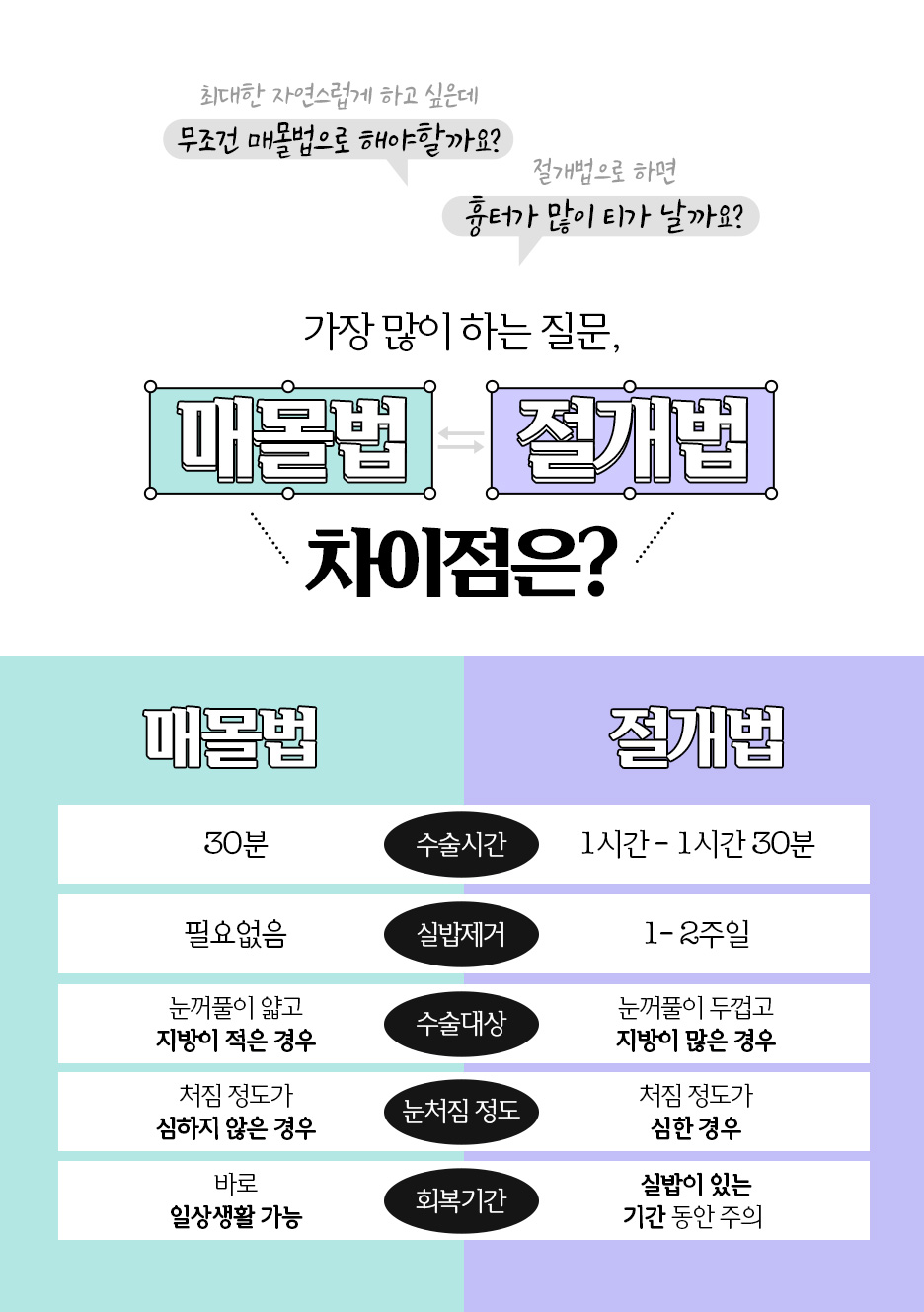
What's the difference between the non-incision and incision methods?
When you look into double eyelid surgical methods, you'll end up comparing the non-incision (suture) method and the incision method.
The non-incision method creates the line using sutures without cutting the skin, while the incision method cuts the skin to form the line while checking the condition of the eyelid.
This also means there are differences in surgery time, suture removal, and recovery.
Depending on your current eye condition, such as skin laxity or the tissue quality of your eyelids, the options you can consider may also differ.
If you're considering lower-lid canthoplasty in particular, it's more important to first check what changes have occurred in your eyelids than to simply compare whether non-incision or incision is better.
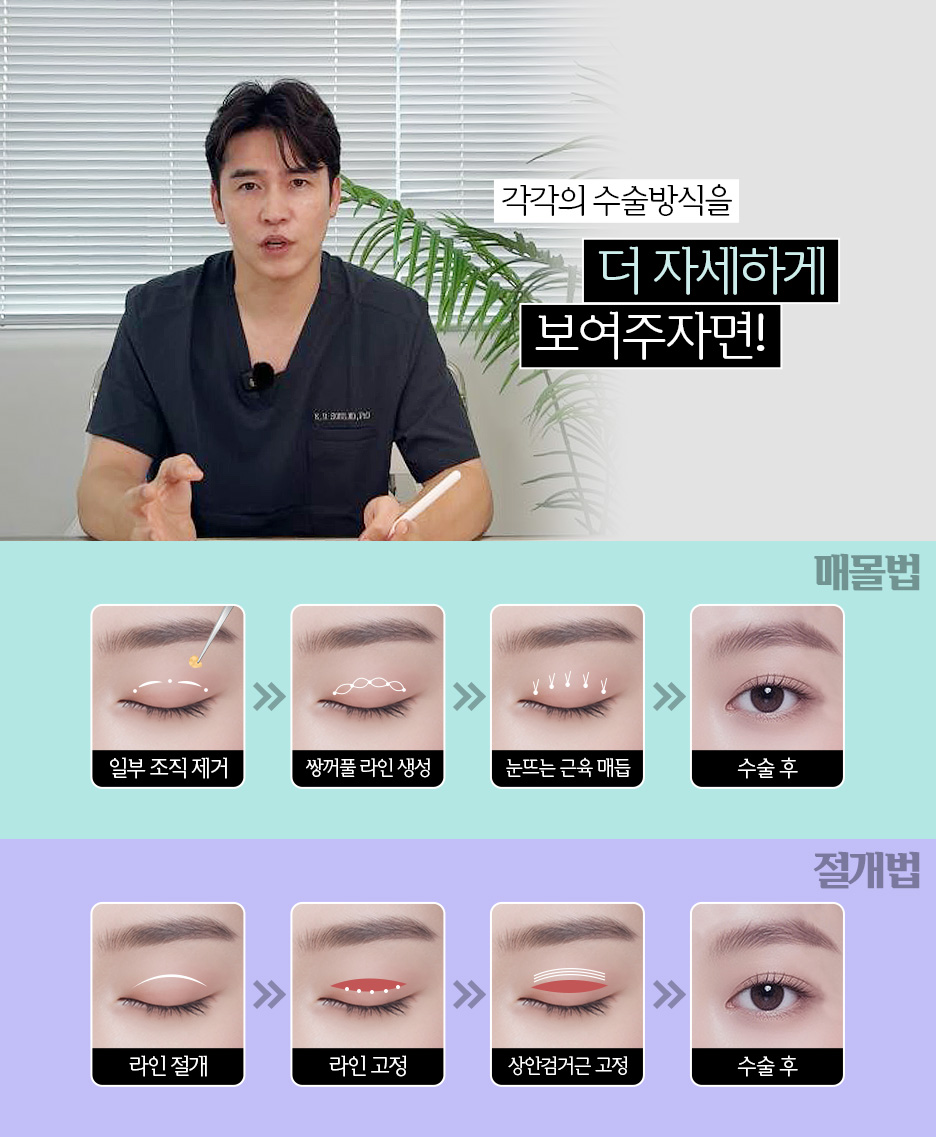
The process actually differs once you look into it
The non-incision method may involve suturing several points to form the double eyelid line and connecting it to the structures that open the eye.
The incision method involves making an incision along the line and then adjusting what's needed. In some cases, correction related to the muscle that lifts the eyelid may be performed at the same time.
In short, while both look like “double eyelid surgery” from the outside, the way the surgeon approaches the eyelid is quite different.
If your eyes have already had surgery, you need to review both the existing line and the current condition of your eyelids.
That's a different reason from when you first started researching surgery.

That's why some people consider the incision method
So when is the incision method worth considering?
It may be considered when there is significant skin laxity, or when the eyelid condition needs to be checked while adjusting the double eyelid line.
In some cases, eye-corner correction is considered alongside it.
Of course, you can't decide that “the incision method is right for me” based on this alone.
Especially for revision incision double eyelid surgery, where the eyes have already been operated on once, you need to look at how the existing line was created and what condition your eyelids are in now.
The same goes for lower-lid canthoplasty, the lower-eye procedure you're looking into again. Unlike when you first looked into surgery, this area has already been operated on once, so you'll need to review why you're reconsidering it, what was done in the previous surgery, and how your eyes have changed since then.
You don't need to decide everything from the start, like saying “Just make this line for me” or “I'll go with incision” before you begin eye revision surgery.
Simply start by talking about what bothers you most about your eyes right now!
If you're looking into eye revision surgery, including lower-lid canthoplasty, use the photos of eyes you like as a reference. But also review your current eye condition and previous surgical history to set your direction.















Frequently Asked Questions
What's the difference between in-line and in-out line?
The two lines differ in where the double eyelid line begins. An in-line flows naturally from the inner corner of the eye, while an in-out line starts relatively narrow at the inner corner and becomes visible partway along.
What should I check before lower-lid canthoplasty or revision incision double eyelid surgery?
It's recommended to review your previous surgical history together with your current eye condition. Talk through how the existing line was made, what changes have occurred in your eyelids, and what result you're hoping for.
How do the non-incision and incision methods differ?
The non-incision method creates the line with sutures without cutting the skin, while the incision method cuts the skin to form the line while checking the condition of the eyelid. The two also differ in surgery time, suture removal, and recovery.
When is the incision method considered?
It may be considered when there is significant skin laxity or when the eyelid condition needs to be checked while adjusting the double eyelid line. In some cases, eye-corner correction is considered together with it. However, this alone isn't enough to decide on a method.
Do I need to decide on a specific line before eye revision surgery?
No, you don't need to decide everything from the start. You can simply begin by talking about what bothers you most about your eyes right now.
How should I use SNS photos when considering revision surgery?
Yes, it's fine to show the eye photos you want during a consultation. However, rather than copying a photo exactly, think about which aspects appealed to you. What you discuss may vary depending on whether you like the height of the line or the shape at the inner corner.
Clinic Info
Details
- 서울 강남구 도산대로 121 YK타워 5·6층
- 02-6212-8080
- Mon-Fri 10:00-19:00Sat 10:00-17:00 Closed days calendar ›
- Director 송경호
- clyveps.com