2026-10-20
Facial Thread Lifting: Finding the Right Thread Lift for Your Face | A Guide to Face Lifting
A guide to facial thread lifting: why nasolabial folds may involve the front cheeks, how to compare Caven and Mint threads, and how age affects your concerns.

Facial Thread Lifting: Finding the Right Thread Lift for Your Face, and a Guide to Face Lifting

While looking through old photos,
you sometimes wonder, “Were my nasolabial folds always this deep?”
You thought only the area around your mouth had changed, but your front cheeks also look flatter
and your facial contour looks heavier than before.
It's hard not to feel concerned.
In moments like this, some people start by searching for facial thread lifting.
Before looking into treatment options, there's one thing to consider first.
What you're worried about right now—
is it really just the wrinkles, or have things gradually shifted from your front cheeks all the way down to your facial contour?
Nasolabial folds: should you look at the front cheeks too?
Nasolabial folds can look deeper
as lines form in the skin,
or when the volume or tissue position of the front cheeks shifts,
shadows can form beside the nose.
Even if they look similar in the mirror,
the underlying causes can be different.
So if you're looking into facial thread lifting,
rather than focusing only on the nasolabial line,
compare the line running from the front cheeks to the corners of the mouth as well.
You may normally notice only the wrinkles,
but when you place photos side by side, the shape of your front cheeks
or the change in your facial contour may be what stands out first.

Does a change in the front cheeks also change your overall impression?
The midface, which spans from under the eyes to the front cheeks,
is an area that contributes to the three-dimensional look of the face.
When the full, supportive feel of the front cheeks fades,
the center of the face may look flat,
and the curve beside the nose may look more pronounced than before.
When these changes build up,
they can make the face look longer or give a more tired impression, beyond simply deeper wrinkles.
Of course, this doesn't happen the same way for everyone.
It depends on your natural face shape, volume, and skin condition.
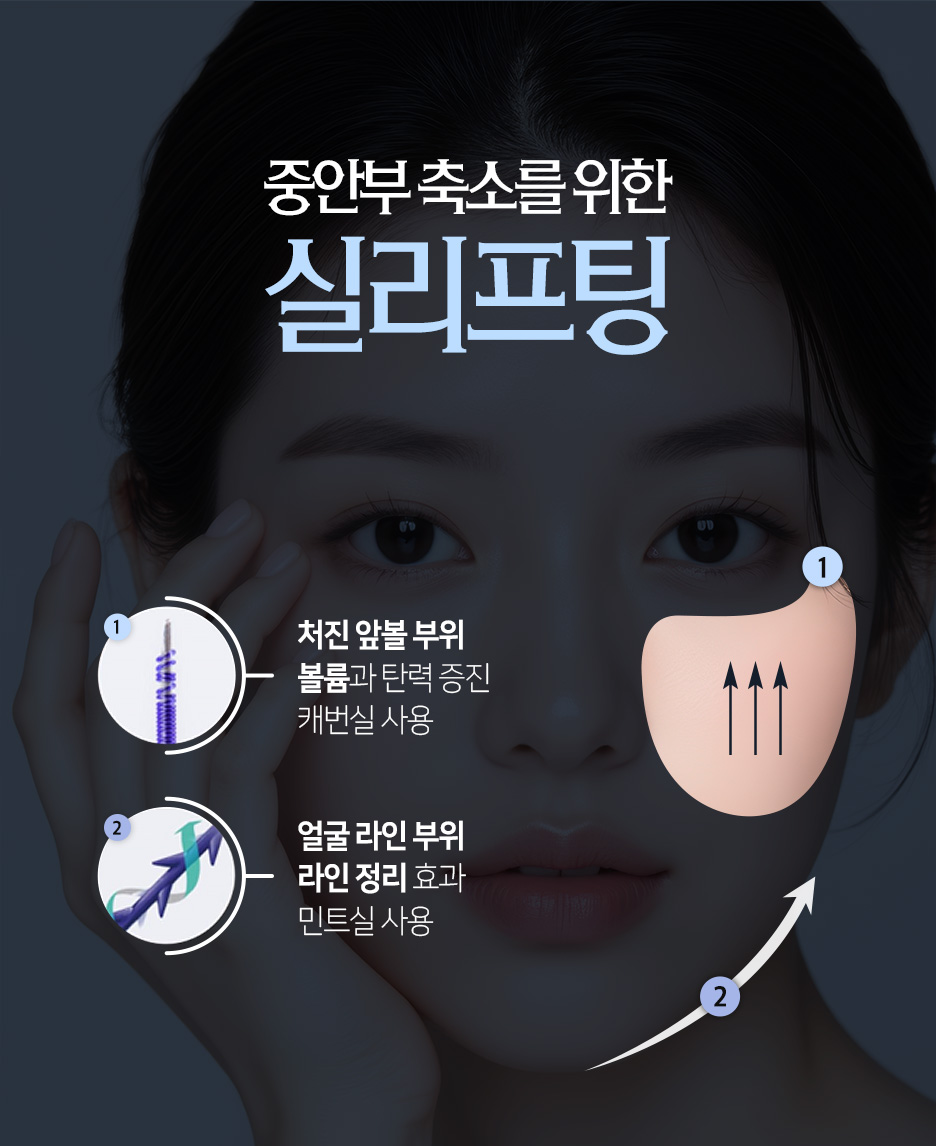
What's the difference between Caven threads and Mint threads?
As you look into types of thread lifts,
you'll come across many names, such as Caven and Mint threads,
and many points can be confusing.
Rather than starting with which thread is better,
it's easier to understand by first thinking about
which area is your concern.
For the front cheeks, volume and tissue position matter most,
while for the outer facial contour, the direction of sagging and the overall outline should be considered together.
Since Caven and Mint threads each have their own characteristics,
it's hard to say that any one type
suits every face equally well.
Facial thread lifting isn't about
choosing based only on the thread name.
The application method can also vary depending on your skin thickness, elasticity, and the degree of sagging.
Facial proportions aren't everything
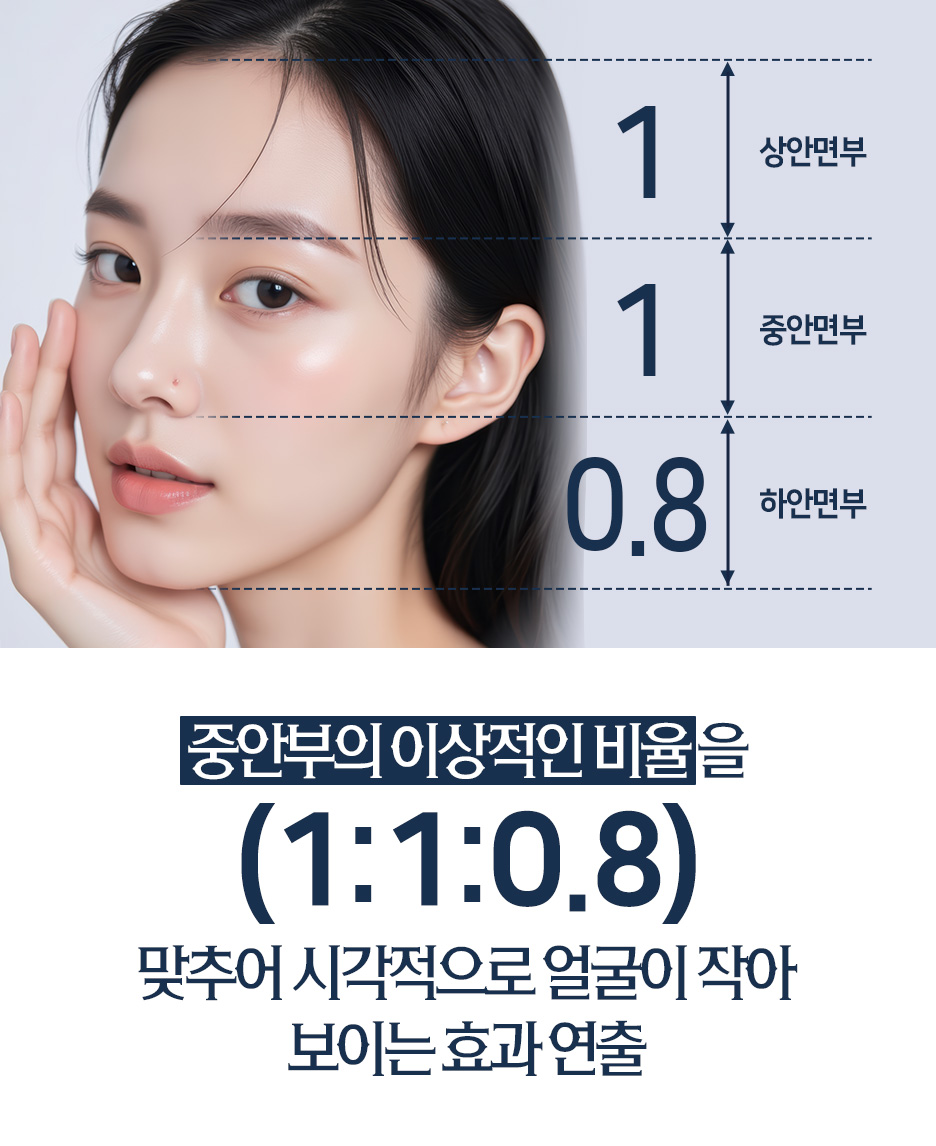
When describing facial proportions,
the upper face, midface, and lower face
are sometimes referenced at a rough ratio of 1:1:0.8.
That said, this ratio
isn't a one-size-fits-all answer for every face.
Bone structure, the placement of facial features,
and facial width all differ from person to person.
Even with similar proportions, the impression can be different,
and even with the same wrinkles, one person may be very bothered while another isn't.
When considering face lifting, too,
it's a good idea to start by identifying
which part of your face makes your facial contour look different to you.

Concerns change with age
A facial contour that didn't bother you much in your 20s
may start to look different in your 30s,
and after middle age, changes in wrinkles and volume
can become noticeable all at once.
This is also linked to the skin's collagen and elasticity changing as we age.
Of course, skin condition can't be sorted by age alone.
Even people of the same age can differ widely in skin thickness, elasticity, and volume.
When looking into types of thread lifts,
rather than starting with your age,
it's more helpful to figure out whether your biggest concern right now is wrinkles,
the volume of your front cheeks, or sagging of the facial contour.
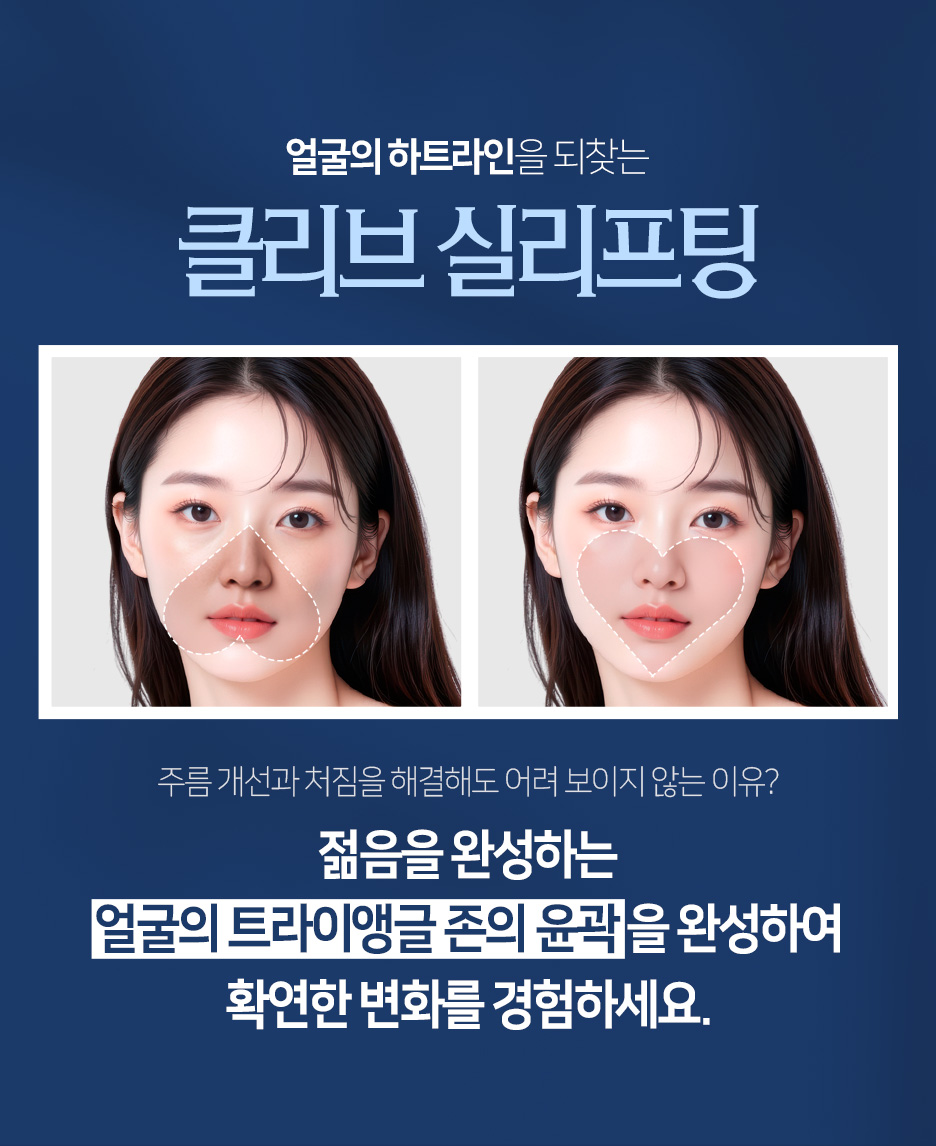
A heart line isn't completed by the jawline alone
When people talk about a heart line,
a slim jawline is usually the first thing that comes to mind,
but the impression of a face isn't determined by the jawline alone.
The volume of the front cheeks, the contour below the cheekbones,
and the flow from the corners of the mouth to the jawline
all play a role, too.
Even if the jawline looks sharp, if the front cheeks look hollow
or the shadows around the mouth are deep,
the facial contour may feel different from what you had in mind.
This is why, when considering face lifting,
it's worth looking at how the area from the front cheeks to the outer contour connects,
rather than focusing on just one area.

So, what has changed in your face?
Just because nasolabial folds are your concern
doesn't mean everyone needs the same approach.
For some, a decline in skin elasticity may be the main concern,
while for others, the volume of the front cheeks
or changes in the outer facial contour may be more bothersome.
If you're considering facial thread lifting,
start by sorting out which areas you feel have changed the most.
When comparing types of thread lifts,
it's important to check not only the results you hope for,
but also the scope of application, limitations,
and the possibility of side effects.
Face lifting is no different.
Rather than simply following the trend,
it matters to think about it in terms of
which changes in your own face bother you.
Even if you're dealing with the same nasolabial fold concern,
your starting point can be different!















Frequently Asked Questions
If nasolabial folds are your concern, should you look at the front cheeks too?
Yes. Rather than looking only at the nasolabial line, it's a good idea to compare the line running from the front cheeks to the corners of the mouth as well. The reason nasolabial folds look deep may lie not only in the skin lines but also in the volume or tissue position of the front cheeks.
Can I choose a thread lift type based only on the thread name?
No, choosing based only on the thread name isn't the right approach. The article explains that the method of application can vary depending on which area is your concern, your skin thickness and elasticity, and the degree of sagging.
Which is better: Caven threads or Mint threads?
It's hard to say that one thread suits every face equally well. Caven and Mint threads each have their own characteristics, so it's easier to understand by first considering which area is your concern, such as the front cheeks or the outer facial contour, rather than focusing on the thread name.
Is a heart line achieved just by slimming the jawline?
No, the impression of a heart line isn't determined by the jawline alone. The volume of the front cheeks, the contour below the cheekbones, and the flow from the corners of the mouth to the jawline also play a role.
Do facial concerns change with age?
Yes, the article explains that facial concerns can change with age. A facial contour that didn't bother you much in your 20s may look different in your 30s, and after middle age, changes in wrinkles and volume can become noticeable at the same time. However, skin condition can't be categorized by age alone.
Clinic Info
Details
- 서울 강남구 도산대로 121 YK타워 5·6층
- 02-6212-8080
- Mon-Fri 10:00-19:00Sat 10:00-17:00 Closed days calendar ›
- Director 송경호
- clyveps.com