2026-11-01
Inner and Outer Eye Corner Restoration and Double Eyelid Revision: When Can You Have Them Again?
Revision timing for inner or outer eye corner restoration and double eyelid revision is not set by a fixed number of months. Recovery, scarring, and tissue condition are checked first.

Inner and Outer Eye Corner Restoration and Double Eyelid Revision: When Can You Have Them Again?

Some people start thinking about another procedure a while after their eye surgery.
The double eyelid crease may have settled differently than expected,
or they may want to readjust their eye shape after an inner or outer eye corner incision.
In these cases, not only the surgical method but also when a revision can be considered is an important question.
However, the timing of a revision cannot be judged simply by how many months have passed since surgery.
That is because we need to look at what procedure was done before and what the current condition of the eyes is.
Today, we will look at what is checked when considering inner or outer eye corner restoration or double eyelid revision,
and how the timing of revision surgery is decided.

Why do people consider revision after eye surgery?
Right after surgery, the eyes may look unnatural due to swelling and the healing process.
Some changes happen naturally over time,
but there are also cases where concerns remain even after a long time, such as the crease loosening or asymmetry becoming noticeable.
With inner or outer eye corner incisions too, the change in eye shape after surgery may feel different from what was expected.
There are many reasons for considering revision,
but problems that look similar on the surface can have different causes.
Whether the issue is with the double eyelid crease, changes in skin or tissue,
or changes at the site of the previous eye corner incision, what needs to be checked will differ.
So if you are planning a revision, the first step is to check what changes have occurred in your eyes.
Is an eye that has had surgery once still in the same condition as before?
When planning a revision, you need to look not only at the current shape of the eyes
but also at the changes that have occurred since the first surgery.
Scarring or adhesions may remain at the surgical site,
and the amount of skin laxity or fat may also differ from before surgery.
In particular, inner and outer eye corner restoration, which correct a site that has already been operated on, and double eyelid revision
may involve different options depending on this tissue condition.
That is why it is important to plan the direction of surgery again based on the tissue and skin that remain now,
rather than simply trying to undo the previous surgery.
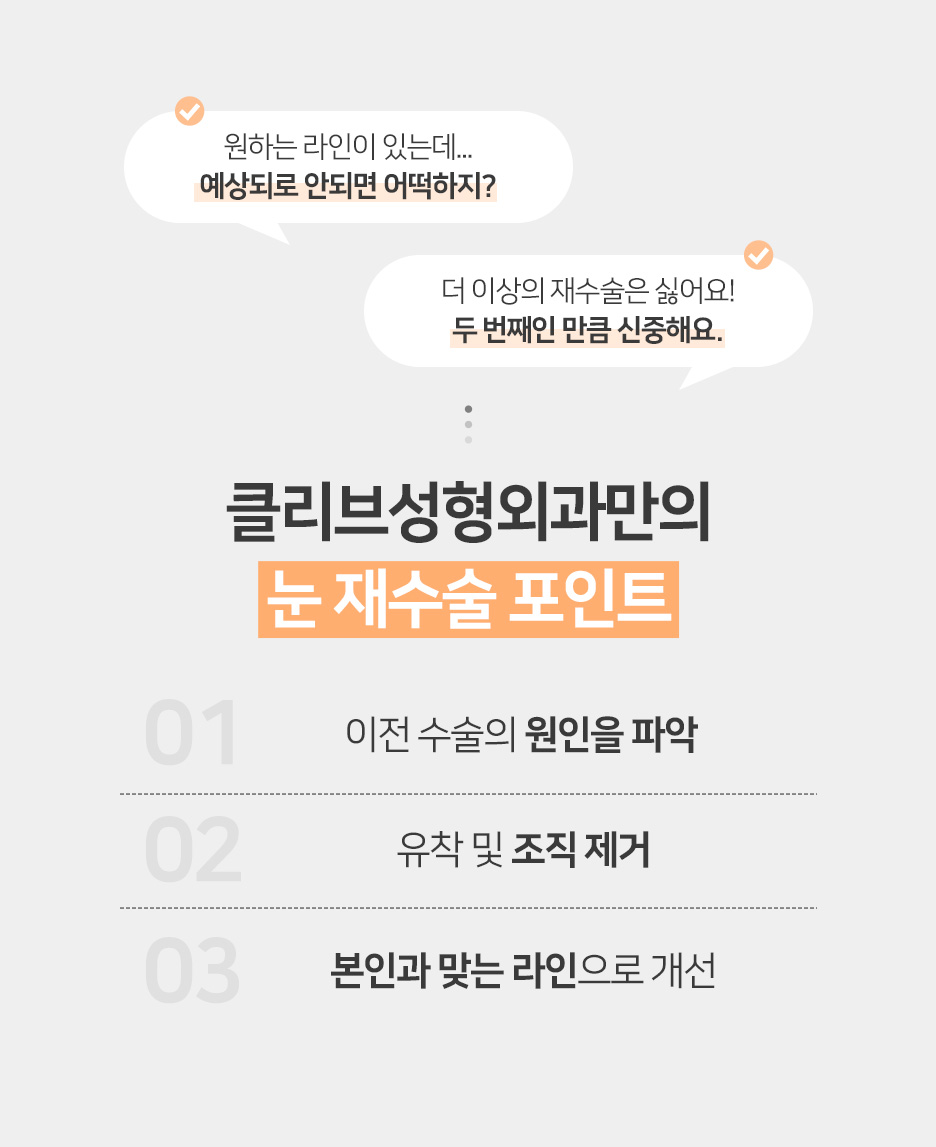
So what should be checked before revision surgery?
First, check what kind of surgery was done before.
For a double eyelid revision, the existing crease, skin thickness, and fat can be examined,
and for inner or outer eye corner restoration, the scarring and adhesions at the site, along with the current tissue condition, are checked.
It is also important to look at how much time has passed since surgery.
After surgery, not only does the swelling go down, but scarring and tissue also continue to settle,
so it is important to confirm how well the eyes have recovered.

Revision surgery does not mean reapplying the same method as before.
If the change in the double eyelid crease is the concern, an incisional revision may be considered after checking the existing crease and skin condition.
When the eye-opening strength or the balance of the eye shape must be examined together, eyelid correction may also be considered.
If the shape of the inner corner after an inner eye corner incision is the concern, inner eye corner restoration may be considered,
and if the shape of the outer corner or changes at the site after an outer eye corner incision are the concern, outer eye corner restoration may be considered.
When necessary, the fat condition may also be checked and fat adjustment planned at the same time.
However, even when the concern is in the same area, the methods that can be considered may differ depending on the cause and the current tissue condition.
In the end, rather than deciding on the name of the surgery first, it is important to identify which part of the eyes needs correction and then choose the method.

Revision surgery should be planned according to the current condition of the eyes.
When consulting about a revision, the details of the previous surgery and the current condition of the eyes are checked together.
After examining the skin and tissue condition and any traces left by the previous surgery,
the surgeon determines which methods can be considered in the current state.
At Cleave Plastic Surgery, a clinic known for double eyelid revision, we also review the traces of the previous procedure and the current condition of the eyes
before planning the direction of surgery during revision consultations.
In particular, rather than deciding the timing based only on dates,
it is best to decide after checking the current state of recovery and the condition of the tissue.
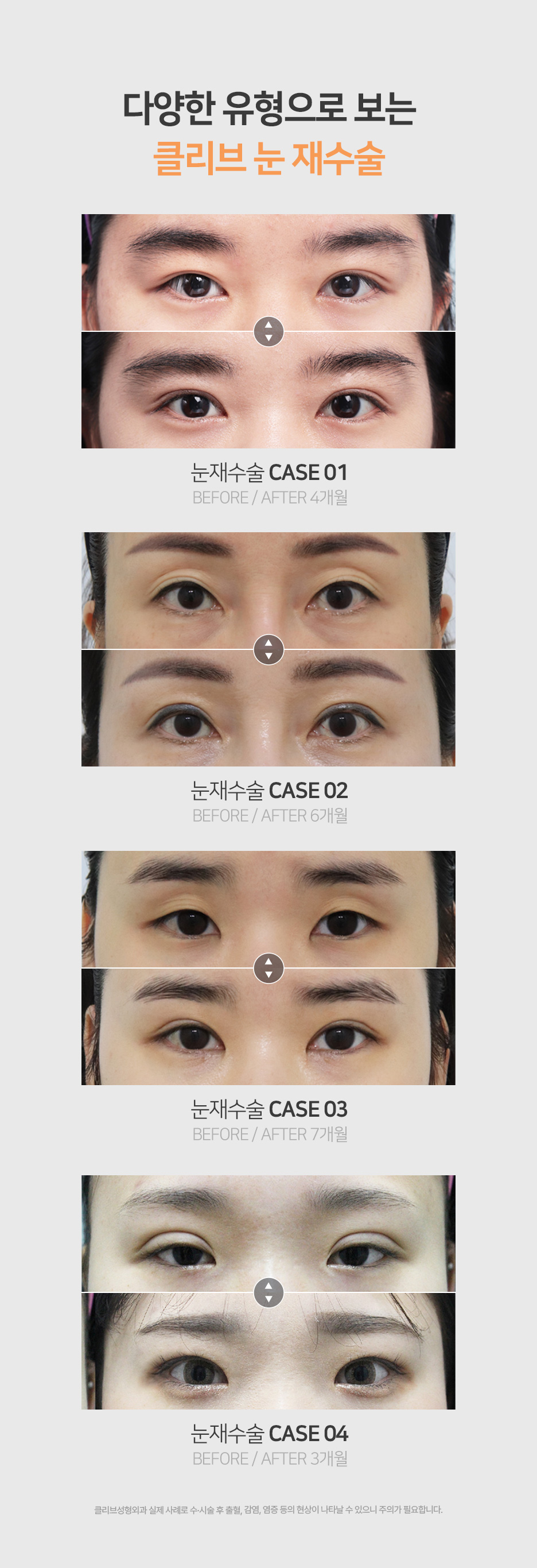
So when can revision surgery be considered?
Inner and outer eye corner restoration and double eyelid revision cannot be judged by a fixed period such as 3 months or 6 months after surgery.
This is because it depends on how well the eyes have recovered, the condition of any scarring or adhesions,
and whether the skin and tissue are in a state where revision can be considered.
Therefore, rather than deciding on revision just because a certain period has passed since surgery,
it is better to check the current condition of the eyes and then determine the appropriate timing and method.
If you are considering a revision, start by discussing the details of your previous surgery and what concerns you most right now,
and then check which methods may be considered for your eyes.
In the end, what matters most in revision surgery is not simply how many months have passed,
but whether your eyes are in a condition where revision can be considered.









Frequently Asked Questions
How many months after double eyelid surgery can I have a revision?
It is difficult to set a single timeframe such as 3 or 6 months. The right timing is best decided by checking how well you have recovered, the condition of any scarring or adhesions, and the condition of your skin and tissue.
What is checked before revision surgery?
First, the details of your previous surgery are reviewed, along with how much time has passed since surgery and how well you have recovered. For double eyelid revision, the existing crease, skin thickness, and fat are examined. For inner or outer eye corner restoration, scarring, adhesions, and the current tissue condition are checked.
Is revision done using the same method as the original surgery?
No, revision does not simply reapply the same method. If the crease has changed, an incisional revision may be considered after checking the existing crease and skin condition. When the eye-opening strength or the overall balance of the eyes must be checked together, eyelid correction may also be considered.
When is inner or outer eye corner restoration considered?
Inner eye corner restoration may be considered if you are unhappy with the shape of the inner corner after an inner eye corner incision. Outer eye corner restoration may be considered if you are unhappy with the shape of the outer corner or changes at the site after an outer eye corner incision. Even for the same concern, the appropriate method can differ depending on the cause and the current tissue condition.
What is checked during a revision consultation?
The details of your previous surgery and the current condition of your eyes are checked together. After examining the skin and tissue condition and any traces left by the previous surgery, the surgeon determines which methods can be considered in your current state.
Clinic Info
Details
- 서울 강남구 도산대로 121 YK타워 5·6층
- 02-6212-8080
- Mon-Fri 10:00-19:00Sat 10:00-17:00 Closed days calendar ›
- Director 송경호
- clyveps.com