2026-09-22
Middle-Aged Eye Surgery: Concerned About Drooping Eyes? Read This Before Ptosis/Eyelid Lift Surgery
Learn key factors to consider before middle-aged eye surgery. Discover how upper blepharoplasty, brow lifts, and lower blepharoplasty address drooping lids and under-eye aging.

Middle-Aged Eye Surgery: Concerned About Drooping Eyes? Read This Before Ptosis/Eyelid Lift Surgery (Middle-Aged Blepharoplasty)

As we age, many people begin to notice that the area around their eyes doesn't look quite the same as before.
Eyelids can start to feel heavy, double eyelid lines may become faint or distorted,
and the area under the eyes often becomes a growing concern.
When you start researching, you'll find more surgical options than you might expect—such as upper blepharoplasty, lower blepharoplasty, and forehead lifts.
How should you decide which middle-aged eye surgery is right for you?
Today, let's explore the key factors to evaluate based on the changes around your eyes.
Is this surgery only for middle-aged individuals?
Procedures commonly grouped under middle-aged eye surgery, such as upper and lower blepharoplasty,
are often thought of as procedures reserved strictly for people in their 40s, 50s, or older.
However, age alone is not the deciding factor.
If someone experiences sagging eyelids
or is distressed by changes in their original eye shape,
even individuals in their 20s and 30s may look into these procedures.
Therefore, middle-aged eye surgery is not confined solely to a specific age group.
The first step is always to examine what specific concerns exist around your eyes
and what structural changes have taken place.
So, what are the differences between upper blepharoplasty, lower blepharoplasty,
and a forehead lift?
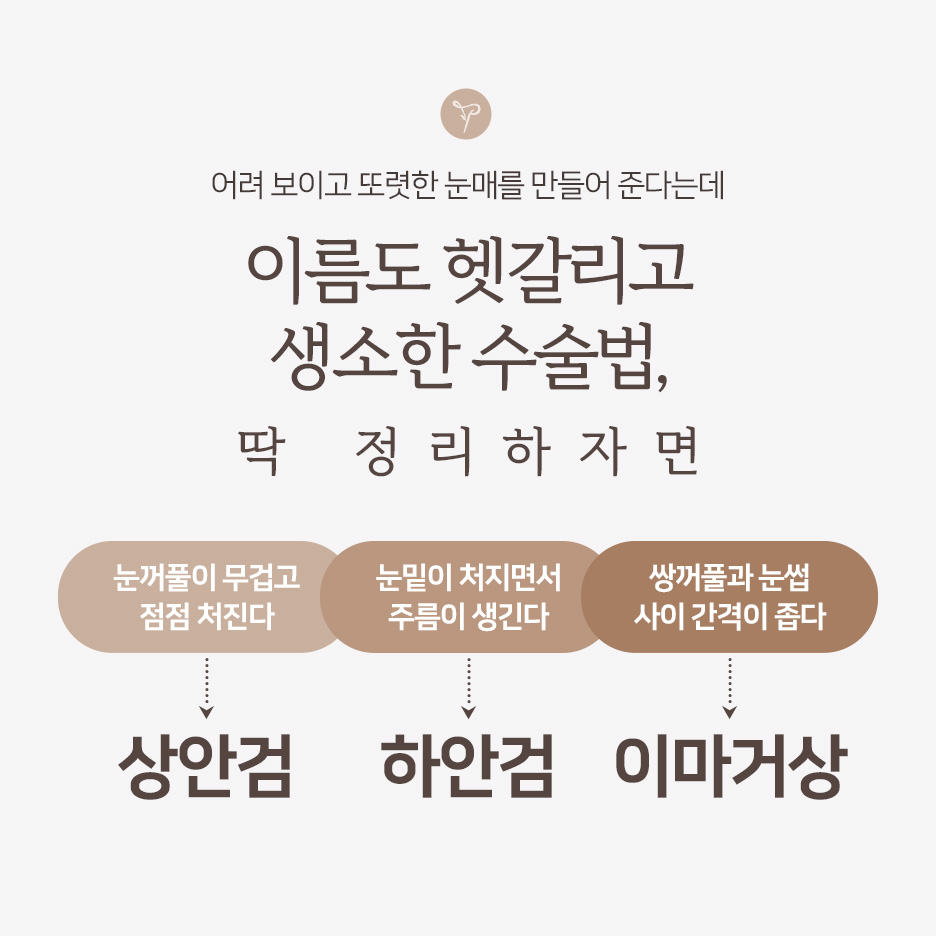
Every eye has distinct concerns
If your upper eyelids feel heavy and look droopy,
upper blepharoplasty is a primary option to consider.
If excess skin or bulging fat beneath the eyes is the issue,
lower blepharoplasty may be recommended.
Additionally, if the distance between your eyebrows and eyes has narrowed,
or if the position of the eyebrows has dropped significantly,
a forehead lift might be the appropriate solution.
In this way, even for seemingly similar eye concerns,
the recommended approach changes depending on precisely where the anatomical changes have occurred.
When researching middle-aged eye surgery,
it is far better to identify what bothers you most right now
rather than choosing a specific procedure name from the start.

Upper blepharoplasty: Is it just about trimming excess skin?
When people think of upper blepharoplasty,
the first thought is often simply cutting away sagging skin.
In reality, specialists evaluate not only skin laxity
but also eyelid fat distribution and eyebrow positioning.
In particular, the amount of skin to address varies for each individual
because eyelid conditions differ widely,
meaning there is no universal, one-size-fits-all formula.
Thus, when exploring surgery for sagging eyelids,
it is vital to examine the current condition of the eyelid and its surrounding anatomy
rather than merely focusing on how much skin can be removed.

Eyebrows can also play a major role
You might think your eyelids are simply sagging,
only to discover upon closer inspection that eyebrow position is a primary contributing factor.
If the eyebrows have drooped
or if the distance between the eyes and eyebrows is narrow,
it is crucial to evaluate whether the issue stems purely from the eyelids.
In such cases, a sub-brow lift (infrabrow excision) may be considered.
Especially if you are planning middle-aged double eyelid surgery,
it is advisable to evaluate the relative positioning of both eyebrows and eyelids,
rather than focusing solely on the crease line itself.
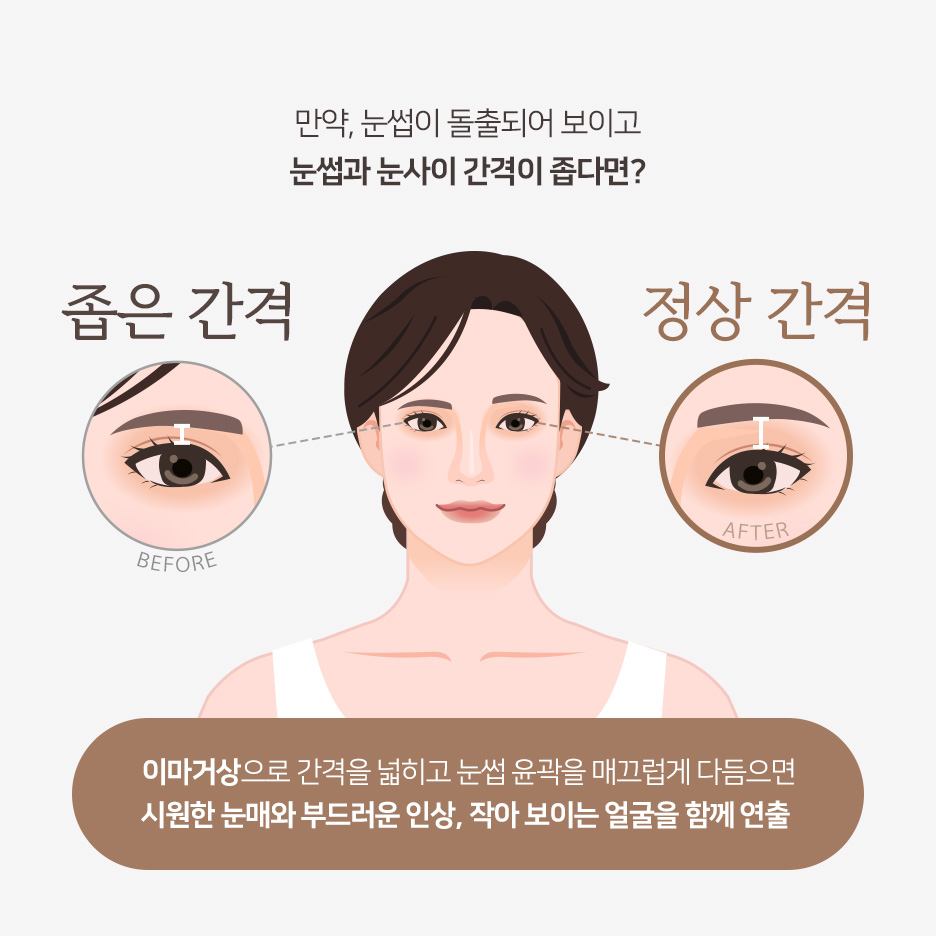
Why evaluate the space between eyebrows and eyes?
When the brow bone appears prominent
or the gap between the eyes and eyebrows is particularly narrow,
addressing only the eyelid skin may lead to unsatisfactory or heavy results.
By assessing both the eyebrow position and surrounding skin elasticity,
a surgeon can determine what alternative or supplementary solutions
might be more effective alongside or instead of eyelid surgery.
Ultimately, when contemplating middle-aged blepharoplasty,
it is best not to focus exclusively on the double eyelid fold,
but to assess the harmonious relationship between the brow and eyelid.
Depending on these structural details,
the ideal surgical approach for middle-aged eyes can vary substantially.

Under-eye concerns: Is it only about fat?
When the area under the eyes looks puffy,
the first thought is usually, "Is this because of excess fat?"
However, when planning lower blepharoplasty,
surgeons look at far more than just the volume or position of fat pads.
The condition of the under-eye skin and the tone of surrounding supporting tissues
are thoroughly evaluated to tailor the correct method.
Therefore, when looking into eyelid rejuvenation,
it is essential to assess the entire periorbital area comprehensively
rather than deciding on a procedure based solely on under-eye puffiness.
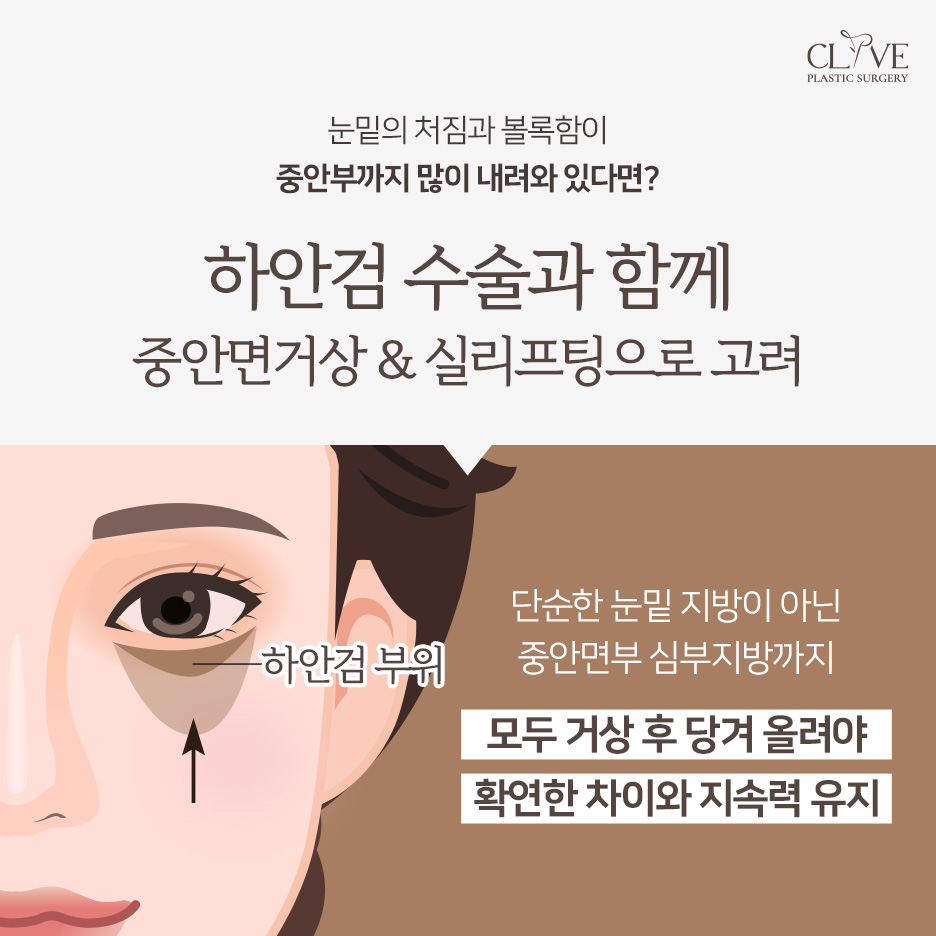
When under-eye sagging extends further downward
Some patients seek lower blepharoplasty for under-eye concerns,
only to realize that the sagging extends across a broader area.
In particular, if the aging changes continue into the midface cheek area,
treating the lower eyelid in isolation may not fully address the problem.
In such instances, combining lower blepharoplasty
with a midface lift or thread lifting may be explored.
Ultimately, having under-eye concerns does not mean everyone receives the same treatment.
It is crucial to determine where the sagging begins
and how far down the facial structures it extends.

What to prioritize before choosing a procedure name
When debating whether you need upper blepharoplasty, lower blepharoplasty,
or even a forehead lift,
it is natural to try and match yourself to a specific surgical name.
However, the structures surrounding the eyes are intricately connected,
making it difficult to make an accurate diagnosis based on one feature alone.
When skin laxity, fat distribution,
eyebrow height, and adjacent facial anatomy are examined together,
the recommended approach may turn out quite different from what you initially envisioned.
Therefore, when considering middle-aged eye rejuvenation,
it is best to start by discussing the exact changes that trouble you most,
rather than fixing your mind on a predetermined procedure.
If you are considering middle-aged double eyelid surgery or eyelid lift procedures,
take the time to have your current anatomical state thoroughly evaluated
before deciding on a final shape.















Frequently Asked Questions
Is middle-aged eye surgery only available for people in their 40s or older?
No, it is not restricted to any specific age group. While typically sought by individuals in their 40s and 50s, those in their 20s and 30s who experience sagging eyelids or noticeable changes in their eye contours can also undergo these procedures.
Does upper blepharoplasty only involve excising sagging eyelid skin?
No, multiple anatomical factors must be evaluated in addition to excess skin. The condition of orbital fat, the position of the eyebrows, and surrounding periorbital structures must all be analyzed to design an individualized surgical plan.
Why is eyebrow position evaluated when treating sagging eyelids?
Because eyebrow drooping and brow position significantly influence the appearance of the upper eyelid. If the brow has dropped or the distance between the eyes and brows is narrow, simply excising eyelid skin may not be sufficient, often requiring a sub-brow lift or forehead lift instead.
Can under-eye puffiness be resolved simply by removing fat during lower blepharoplasty?
No, it is necessary to examine skin elasticity and adjacent midface tissues alongside the volume and position of fat pads. If sagging extends into the midface area, combining lower blepharoplasty with a midface lift or thread lift may be explored.
Clinic Info
Details
- 서울 강남구 도산대로 121 YK타워 5·6층
- 02-6212-8080
- Mon-Fri 10:00-19:00Sat 10:00-17:00 Closed days calendar ›
- Director 송경호
- clyveps.com