2026-10-08
Mini Facelift: Is Lifting Just “This Area” Enough? Forehead Lift and Brow Lift Included
Explains why a mini facelift isn't just a small pull, covering facial zones, midface changes, and why forehead and brow lifts should be considered together with the eyes.
Mini Facelift: Is Lifting Just “This Area” Enough? Forehead Lift and Brow Lift Included

Lately, after taking photos,
there are times I think, “Have I always looked this old?”
My face seems longer than before,
and my eyes somehow look heavier too.
So I start looking up mini facelifts,
but once you dig in, there's more to consider than you'd expect.
I used to think it was simply about pulling the face up,
but the conversation changes depending on where things have sagged.
Today, let's look at those points one by one.
Facelift: Where Exactly Should You Lift?
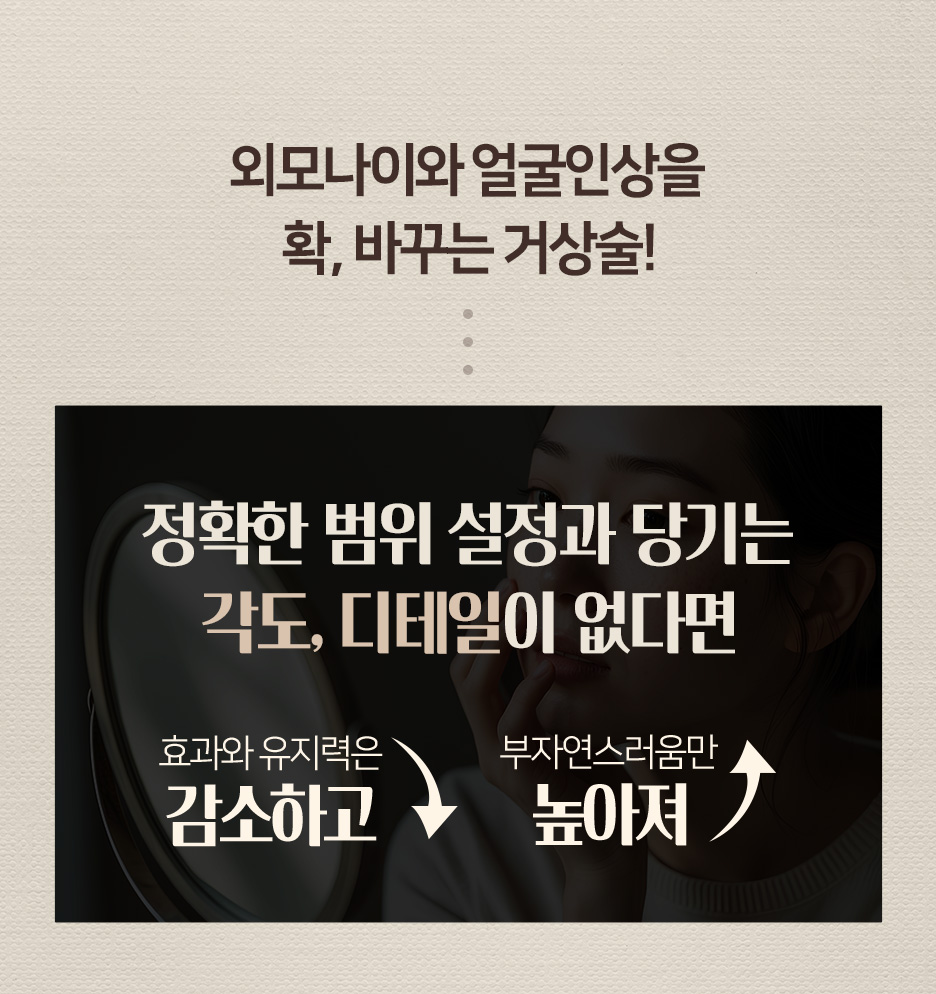
When people talk about a facelift,
most people picture pulling up sagging skin first.
But when you actually look at your face,
the areas where sagging is noticeable differ from person to person.
For some, the forehead and brows are the first concern,
while for others, the cheeks or the area around the nasolabial folds
tend to stand out more.
So when you look into a mini facelift,
don't just ask “How much can it lift?”
Instead, first check
where your own face has changed.

The Three Zones of the Face
If you divide the face broadly,
it can be viewed as the upper face, midface, and lower face.
The forehead and brow area is the upper face,
the area from below the eyes to the cheeks and around the nose is the midface,
and the area around the mouth and jawline falls into the lower face.
Looking at it this way,
it's easier to understand why people's concerns differ even when the sagging looks alike.
When looking into a mini facelift in particular,
the midface, the central part of the face, is hard to leave out.
Why Your Face Looks Longer
“I haven't gained any weight, so why does my face look longer?”
Sometimes you find yourself wondering this.
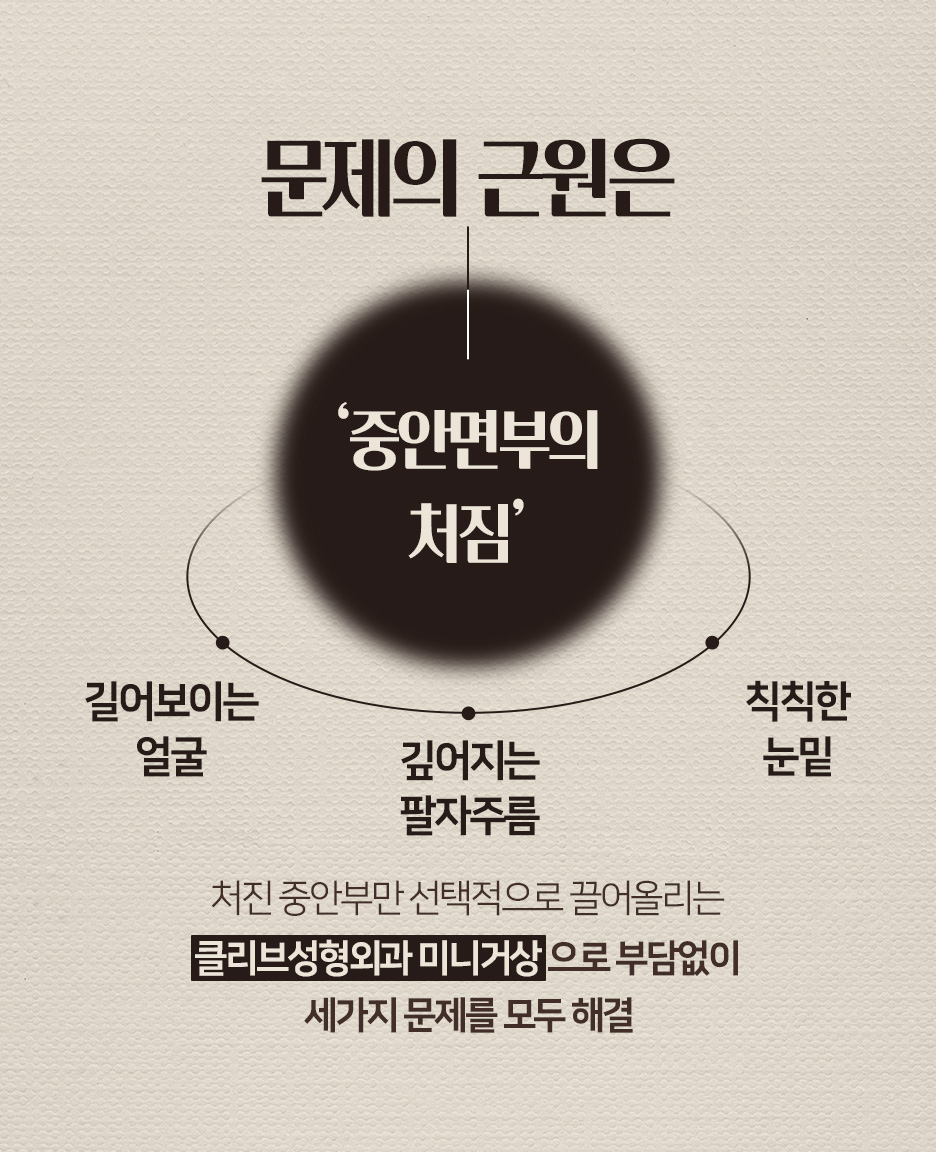
As the position of the midface shifts,
if the cheek area appears to drop downward,
the center of the face can feel longer.
The area around the nasolabial folds also stands out more than before.
You may not notice it much when you check in the mirror,
but after taking photos, these areas can suddenly stand out,
and they may start to bother you.
So when considering a mini facelift,
don't look at the jawline alone;
look at the cheeks and the area around the nasolabial folds as well.
Beneath the Skin: Another Layer of Structure
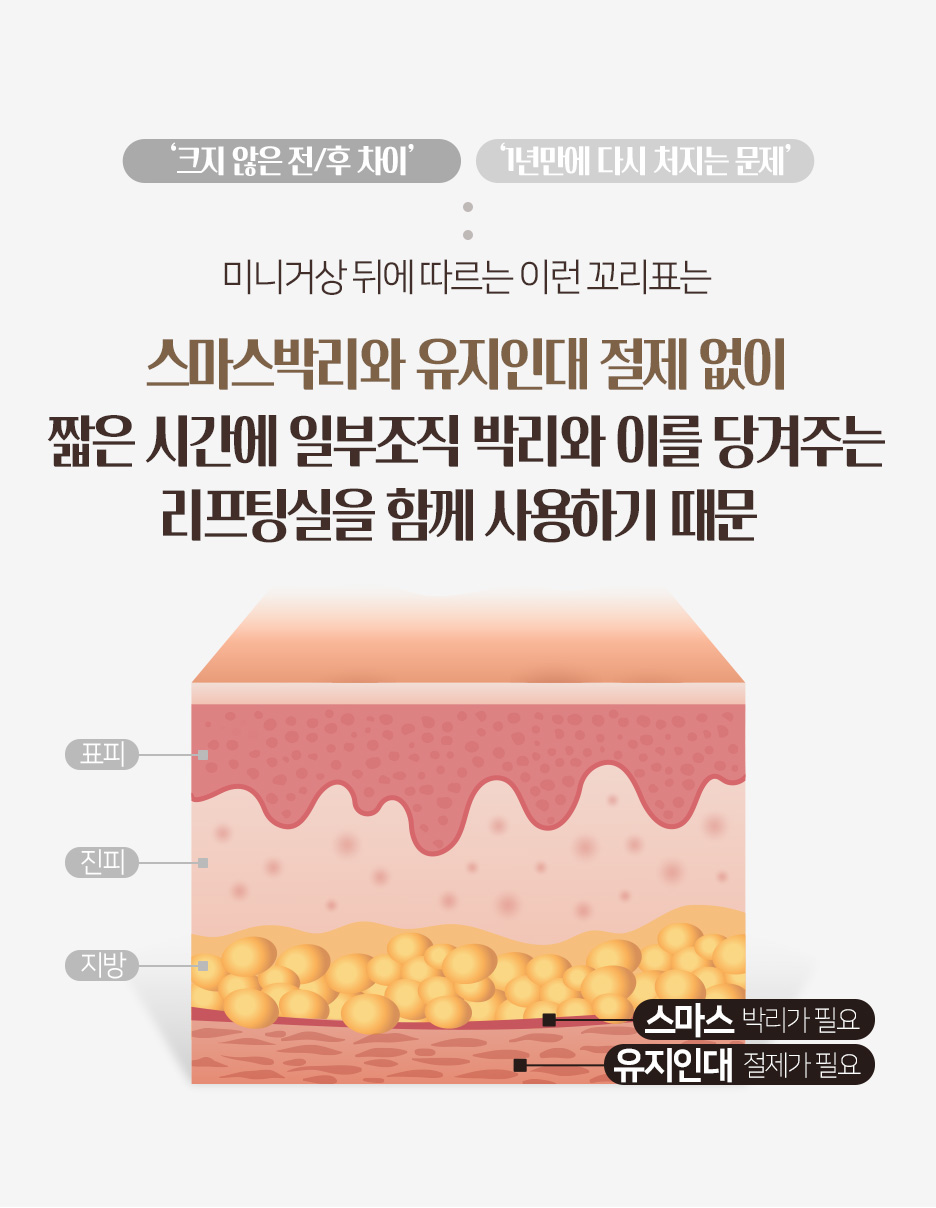
And the face isn't a structure that can be fixed
just by pulling the skin.
Beneath the skin is a fat layer,
and deeper inside, multiple tissues are connected.
The SMAS layer and retaining ligaments are among them.
That's why a mini facelift involves considering not only how much visible skin to lift,
but also how to approach the deeper structures.
Because of the word “mini” in its name,
it's easy to assume it's just a small-scale lift,
but the picture is a bit different.

What Defines a “Mini” Facelift?
When you hear “mini facelift,”
it's natural to picture a procedure with a limited scope.
But looking at the face, that's not always the case.
Some people are more concerned about the midface,
while for others, the jawline or facial contour
is what stands out more.
In the end, rather than asking whether it's “mini” or not,
what matters most is
what looks most different on your face right now.

Heavy-Looking Eyes: Starting with the Forehead
While looking into facial sagging,
you may also start to feel that your eyes don't look the way they used to.
Your eyes haven't gotten smaller,
yet they somehow look heavy and dull.
In situations like this, don't just look at the eyes;
the forehead and brows need to be considered as well.
When the position of the forehead and brows changes,
the eyes can look different too.
So when looking into a forehead lift,
the reason you shouldn't consider the forehead in isolation
comes down to exactly this.

Balancing the Forehead and Brows
When the shape of the forehead changes and the brow position shifts as well,
the overall feel around the eyes changes naturally too.
So when thinking about a forehead lift,
forehead → brows → eyes
Looking at it in this sequence makes it a little easier to understand.
Rather than looking at the forehead alone,
it's helpful to see how it all looks together, including the brows and eyes.
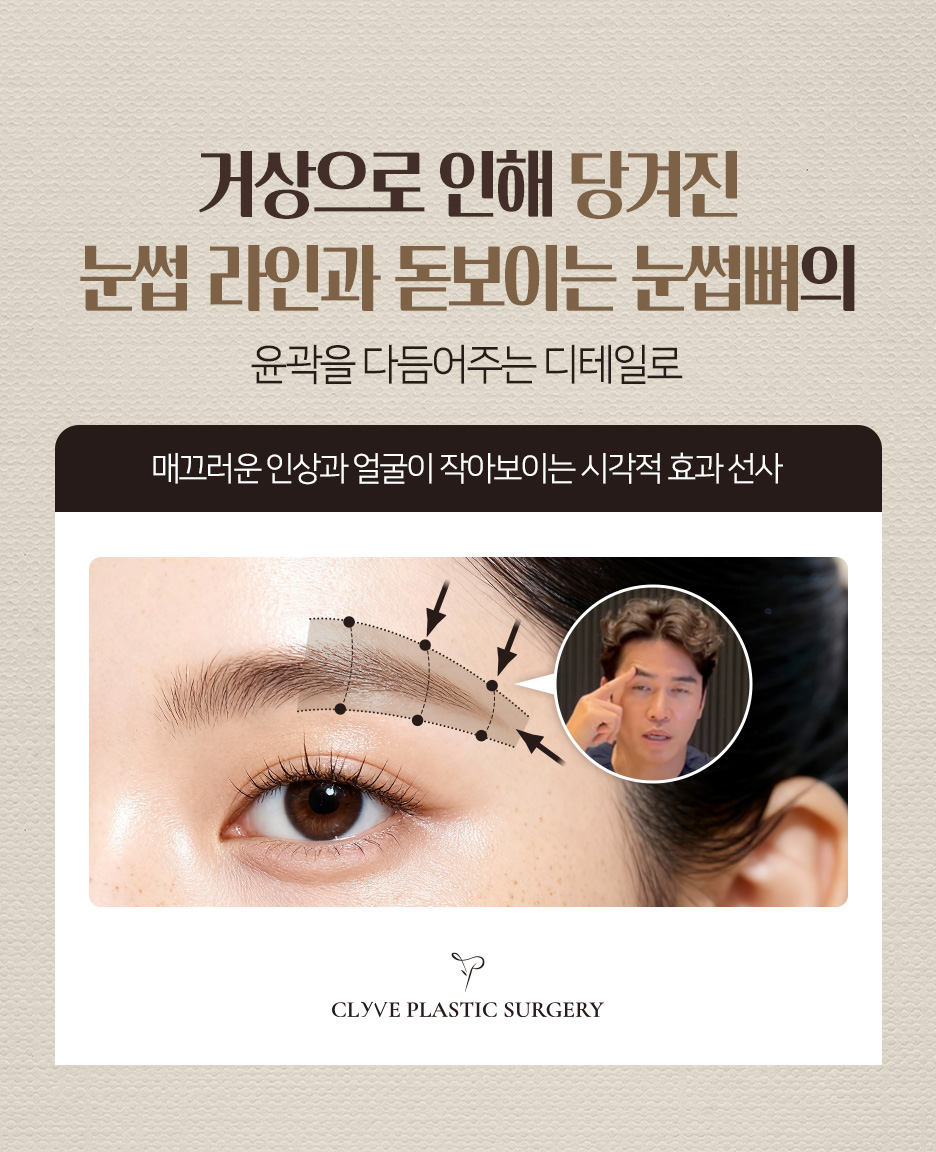
Changes in the Brow Line
Brows can't simply be seen as a single line either.
Where they sit,
and which direction they point,
can make the eyes feel quite different.
So if your brows seem lower than before,
or the area around your eyes feels heavy,
some people look into a brow lift.
A brow lift is also
not simply about lifting the brows up,
but also about where your brows currently sit,
and how the forehead and eyes connect.
Because the Face Is One Whole
When the cheeks sag, the area around the nasolabial folds can look different too,
and when the brows drop, the eyes can look heavier as well.
Connecting these one by one,
it's hard to separate any single part of the face from the rest.
The same goes for a mini facelift.
Rather than finding a sagging spot and pulling it without a plan,
look at how your face has changed compared to before.
That comes first.
Forehead lifts and brow lifts
ultimately start with considering how these connections across the face fit together.















Frequently Asked Questions
Is a mini facelift simply a small-scale lift?
Not necessarily. Because of the word “mini” in its name, it's easy to think of it as a procedure with a limited scope. However, the approach depends on the areas of concern, such as the midface or jawline. What matters most is not whether it's “mini” or not, but what looks most different on your face right now.
Why does my face look longer?
When the position of the midface shifts and the cheek area appears to drop downward, the center of the face may look longer. The area around the nasolabial folds may also become more noticeable than before, and some people don't notice it much day to day but become concerned after taking photos.
How is the face divided into different zones?
The face is broadly divided into the upper face, midface, and lower face. The forehead and brows belong to the upper face, the area from below the eyes to the cheeks and around the nose belongs to the midface, and the area around the mouth and jawline belongs to the lower face.
If my eyes look heavy, should I also look at my forehead and brows?
Yes. When the position of the forehead and brows changes, the eyes can look different as well, so it's recommended to consider the forehead and brows together. Looking at the sequence of forehead → brows → eyes can make it easier to understand.
Is a brow lift just about lifting the brows upward?
No, it isn't viewed simply as lifting the brows upward. It's important to look at where the brows currently sit and how the forehead and eyes are connected.
Does a mini facelift only involve pulling the skin?
No. The face is not a structure that can be addressed by pulling the skin alone. Beneath the skin lies a fat layer, and multiple tissues, including the SMAS layer and retaining ligaments, are connected, so the deeper structures are also taken into consideration.
Clinic Info
Details
- 서울 강남구 도산대로 121 YK타워 5·6층
- 02-6212-8080
- Mon-Fri 10:00-19:00Sat 10:00-17:00 Closed days calendar ›
- Director 송경호
- clyveps.com