2026-07-30
Nonhyeon Station Plastic Surgery: When and How to Get Eyelid Revision Surgery?
Eyelid revision surgery is considered for various reasons, such as thick or uneven double eyelid lines, or an unnatural appearance. This article from Nonhyeon Station Plastic Surgery explains the common reasons for revision, like ‘sausage eyes,’ and emphasizes the importance of a personalized approach based on thorough analysis of the eye's structure and tissue condition.
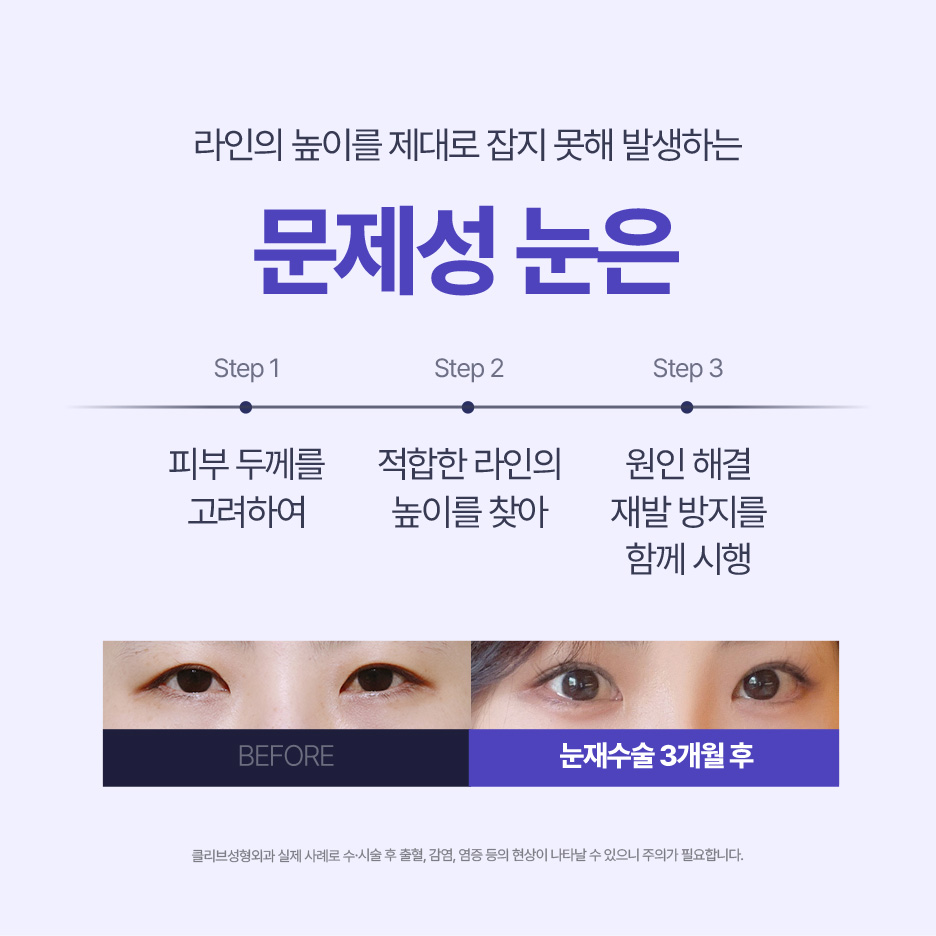

Double eyelid surgery is one of the most commonly performed eye surgeries,
but not everyone achieves their desired results with just one procedure.
Over time, some may feel their double eyelid line looks too thick,
or that the height of the lines on both sides has become uneven. Others may find their eyes look
unnaturally strong when open, leading them to consider revision surgery.
The reasons for considering eyelid revision surgery vary from person to person,
and even if the symptoms appear similar, the underlying causes are often different.
Therefore, it's crucial not to simply lower the existing line or create a new one,
but to thoroughly assess the current eye structure and tissue condition before planning the procedure.
Today, we at Nonhyeon Station Plastic Surgery will elaborate on when eyelid revision surgery is necessary
and what factors need to be checked, based on frequently asked questions during consultations.
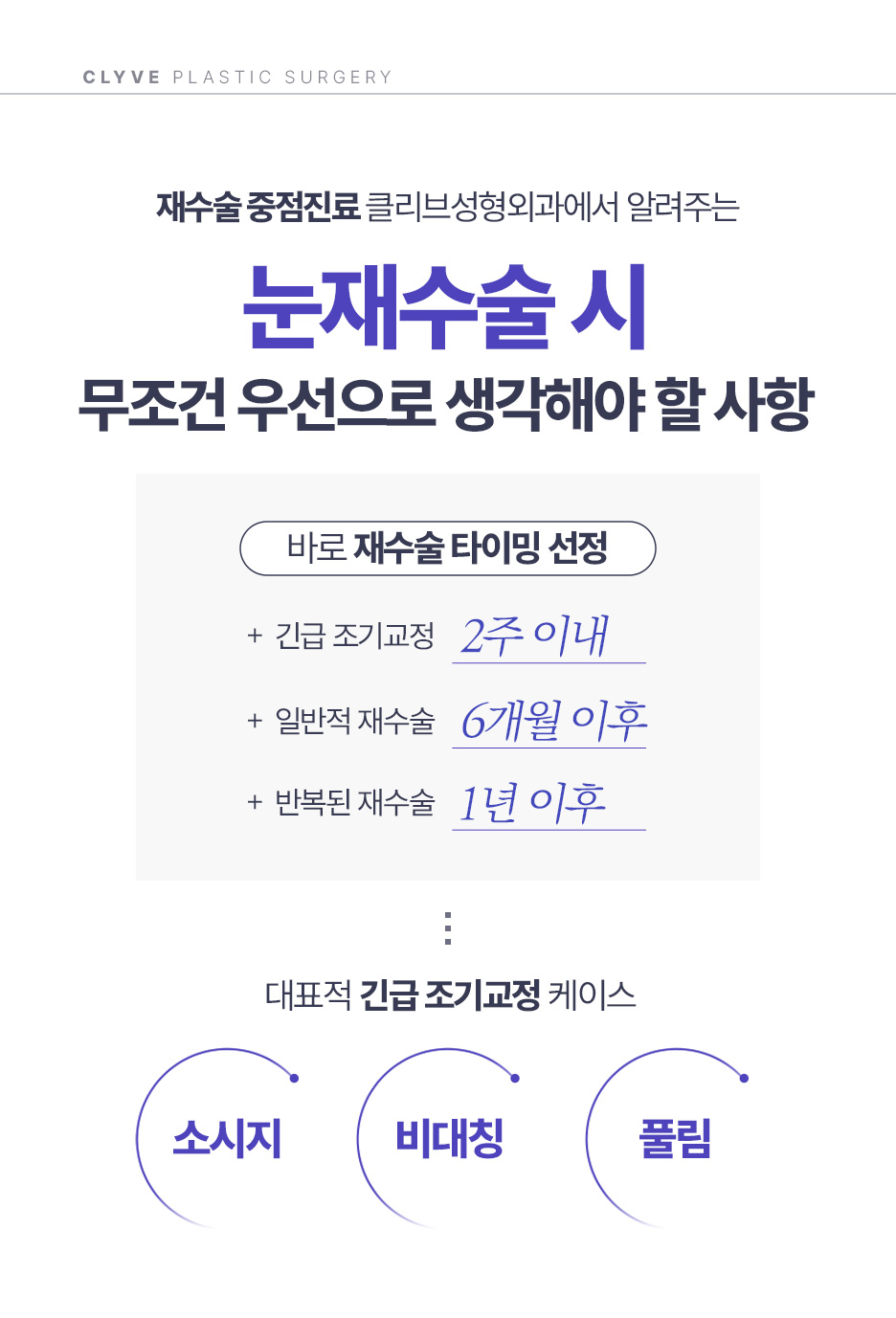
One of the primary reasons people consider eyelid revision surgery is
what is commonly referred to as ‘sausage eyes.’
Unlike temporary swelling that occurs during the recovery process after surgery,
this refers to a condition where the double eyelid line remains
excessively thick or high even after sufficient time has passed.
When the eyes are open, the line can appear overly prominent or give an unnatural impression,
and many individuals consider revision surgery due to these changes.
However, not all ‘sausage eyes’ are caused by the same factors.
Although they may look similar on the surface, the approach can vary depending on the eyelid skin thickness, tissue condition,
and the extent of existing adhesions.
That's why at Nonhyeon Station Plastic Surgery, it's crucial to first analyze the current eye condition
and then plan the direction of revision surgery based on the underlying cause.
Eyelid revision surgery does not mean that the same surgical method
is applied in all cases.
For example, the approach may differ significantly between cases where the double eyelid line needs to be lowered considerably
and cases where only minor adjustments to adhesions are required.
Furthermore, the plan varies depending on whether there is sufficient skin laxity, the extent of scar tissue,
and the degree of tissue damage.
Therefore, at Nonhyeon Station Plastic Surgery, after thoroughly assessing the current eye condition,
we place great importance on comprehensively considering factors such as the need for excision and the state of adhesions
to determine the most appropriate method.
Unlike a first surgery, eyelid revision surgery is performed on tissue that has already undergone changes. Thus,
it's not just about recreating the line, but also considering eye function and a natural appearance
together, which can help increase satisfaction.

Eyelid revision surgery doesn't simply mean recreating a double eyelid that has loosened.
It also involves planning to improve aesthetic aspects such as the height and shape of the double eyelid line that were unsatisfactory after the previous surgery,
left-right asymmetry, scars visible when the eyes are closed, and multiple folds.
However, these issues cannot all be approached with the same method.
A decision must be made after comprehensively checking the current eyelid's skin laxity, scar tissue, extent of adhesions,
and the strength of eye-opening muscles.
Therefore, at Nonhyeon Station Plastic Surgery, it's crucial not to simply create a desired line,
but to thoroughly analyze the existing eye structure and consider the balance between function and design
when planning revision surgery.
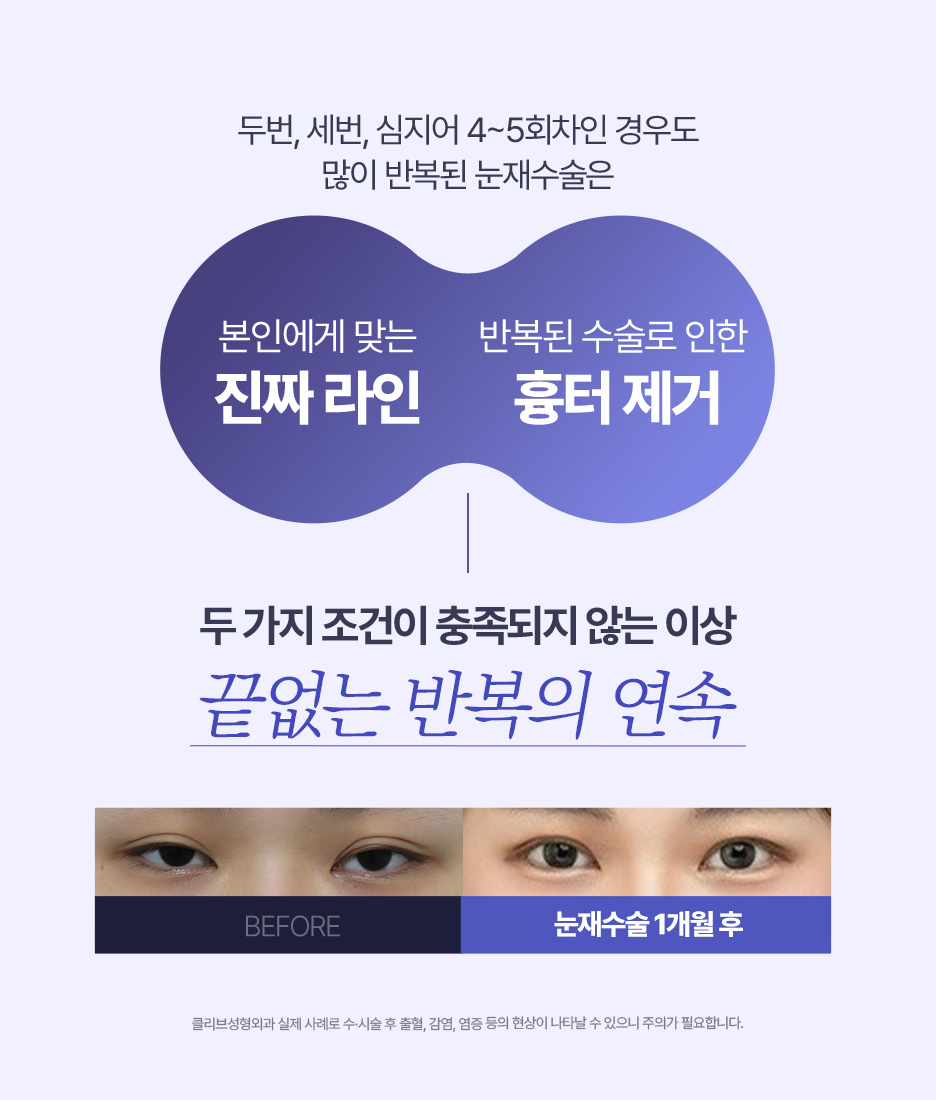
For repeated eyelid revision surgeries,
even more careful planning is required.
If you have undergone eyelid revision surgery two or three times or are considering a fourth
or fifth revision, simply recreating the double eyelid line
may not be sufficient.
This is because scar tissue and adhesions can gradually increase,
and the availability of skin and tissue can decrease with repeated surgical procedures.
In such cases, after a meticulous analysis of the current eye condition,
it's important to not only design a new double eyelid line that harmonizes with your eye structure
but also to consider how to manage the scars and adhesion tissues
formed by repeated surgeries.
Rather than attempting to create yet another line excessively, it's crucial to formulate a plan that considers the balance between function and design. For repeated eyelid revision surgeries, a careful approach based on a thorough diagnosis
can help achieve more natural results.

In eyelid revision surgery, cause analysis is crucial.
What's important when planning eyelid revision surgery
is an accurate analysis of the current eye condition.
Even if the appearance seems similar, the approach can vary depending on whether it's due to a high double eyelid line,
excessive adhesions, or an issue with the eye-opening strength.
To create a more systematic plan, factors such as skin thickness, fat volume, scar tissue, and the number of previous surgeries
must also be considered.
Especially for revision surgeries repeated two or three times or more, as tissue changes have already occurred,
a plan that considers both scars and adhesions, rather than just recreating the line, may be necessary.
Therefore, at Nonhyeon Station Plastic Surgery, after a multi-faceted assessment of the current eye condition,
the process of determining the direction of revision surgery, considering both function and design, is crucial.

For satisfactory eyelid revision surgery,
sufficient consultation is essential.
Eyelid revision surgery involves many more factors to consider than the initial surgery.
This is because it requires checking the tissue changes, scars, and adhesion status from the previous surgery,
and simultaneously considering the current eye's function and design.
Therefore, rather than making a decision based solely on the desired double eyelid line,
it's crucial to plan through thorough consultation to determine which approach is suitable for the current eye structure.
At Nonhyeon Station Plastic Surgery, rather than applying a single method uniformly to everyone for eyelid revision surgery,
the process of comprehensively analyzing the current eye conditions and improvement goals
to find a personalized approach should take precedence.
A natural eye shape is not determined solely by the height of the double eyelid.
When a plan considers function, design, and harmony with the entire face,
it can help achieve more satisfactory results.









Frequently Asked Questions
In what cases should I consider eyelid revision surgery?
Yes, eyelid revision surgery can be considered when the double eyelid line appears too thick or uneven in height, or when the eyes have a strong artificial look when open. Many people consider revision surgery for various reasons, especially for ‘sausage eyes,’ left-right asymmetry, or multiple folds.
Why do ‘sausage eyes’ occur, and how are they approached?
‘Sausage eyes’ refer to a condition where the double eyelid line appears excessively thick or high even after the swelling has subsided post-surgery. The cause varies depending on eyelid skin thickness, tissue condition, and the extent of existing adhesions. Therefore, it's crucial to analyze the current eye condition and plan the direction of revision surgery based on the underlying cause.
Is the eyelid revision surgery method the same in all cases?
No, the eyelid revision surgery method is not applied uniformly in all cases. The appropriate surgical method can vary depending on whether the double eyelid line needs to be significantly lowered, if only adhesions need adjustment, or based on skin laxity and scar tissue condition.
Why is more caution needed for repeated eyelid revision surgeries?
Yes, repeated eyelid revision surgeries require more careful planning because scar tissue and adhesions can increase, and skin and tissue laxity can decrease. It's necessary to consider not just creating a line, but also managing scar and adhesion tissue, and balancing function and design.
What is the most important factor for satisfactory eyelid revision surgery?
For satisfactory eyelid revision surgery, accurate analysis of the current eye condition and thorough consultation are most important. Rather than deciding based solely on the desired line, a personalized plan that considers eye function, design, and harmony with the entire face should be developed.
Clinic Info
Details
- 서울 강남구 도산대로 121 YK타워 5·6층
- 02-6212-8080
- Mon-Fri 10:00-19:00Sat 10:00-17:00 Closed days calendar ›
- Director 송경호
- clyveps.com