2026-10-27
Scar Removal Surgery: Is Stem Cell Therapy the Answer for Sunken and Raised Scars? (Nonhyeon Plastic Surgery)
A guide to scar types, scar removal surgery and recovery care, and stem cell therapy, explaining what to consider before choosing a treatment for sunken or raised scars.

Scar Removal Surgery: Is Stem Cell Therapy the Answer for Sunken and Raised Scars? (Nonhyeon Plastic Surgery)

Even after an injury has healed,
scars can remain and cause concern.
You may have expected them to fade over time,
but a mark where the skin has sunk in or risen up in a thick bump
can linger longer than you'd expect.
In these cases, it's natural to wonder
how best to manage the scar.
How a scar should be treated can vary depending on
its cause and shape.
We'll cover the types of scars, scar removal surgery,
post-surgical care, and stem cell treatment,
in that order.
Scars come in different shapes, too
When we think of a scar, we first picture a mark left on the skin,
but a closer look shows that their shapes differ a little.
Some scars are sunken, where the skin tissue has caved in,
while others stand higher than the surrounding skin.
These are called raised scars.
Where skin has been cut during surgery or an injury,
the scar may remain as a thin line.
These differences are influenced by how deeply the skin was damaged
and by several other factors, including the healing process.
Even scars that look similar on the surface may differ in depth
and in the condition of the surrounding tissue.
If you are considering scar removal surgery,
rather than looking only at the size of the mark,
look at where the scar is and how deep it goes,
and how it compares with the surrounding skin.
It's worth looking into all of this.
The surgical options you can consider may also vary with the shape of the scar.
Recovery matters just as much as surgery
If a scar remains noticeably visible,
scar removal surgery may be worth considering.
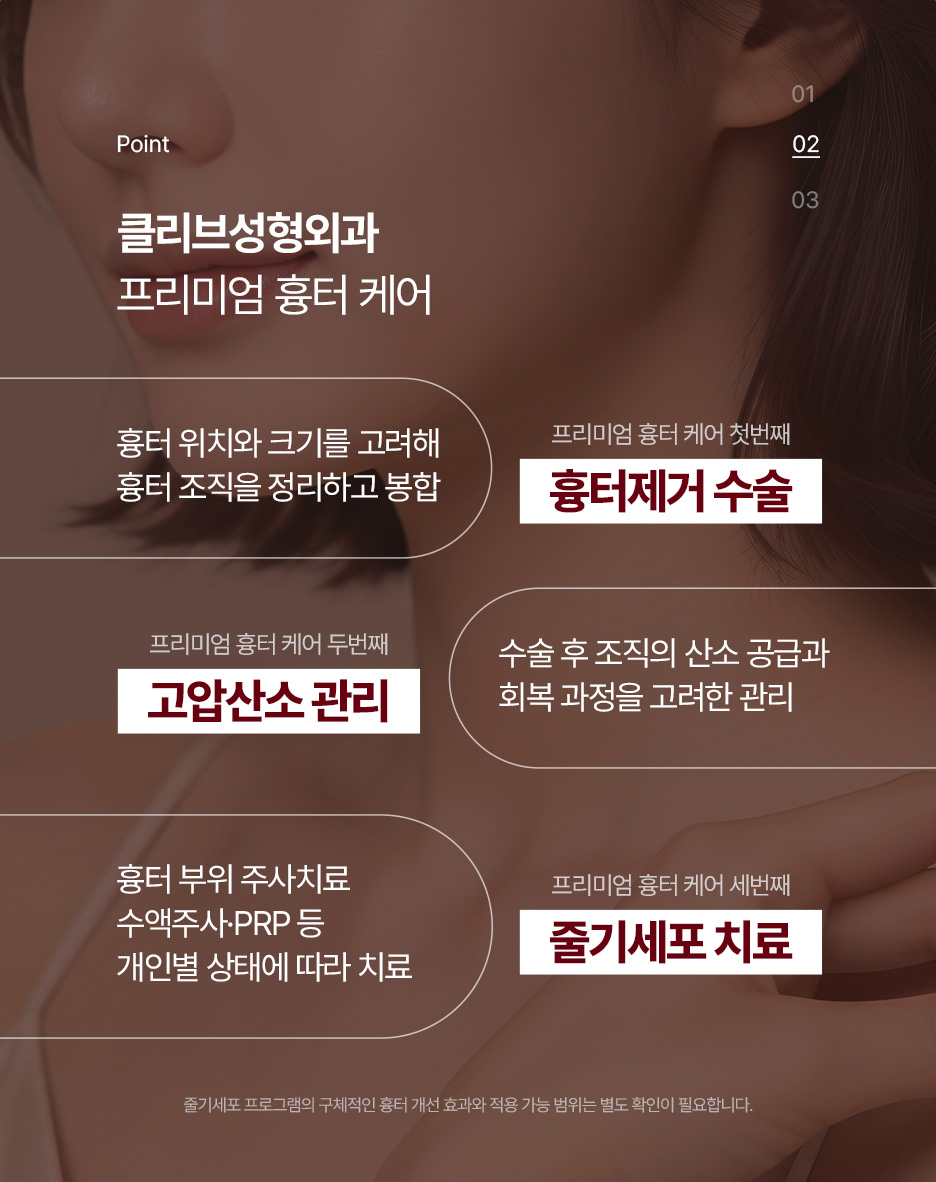
The scar tissue is trimmed away,
and the surrounding skin is closed with sutures,
a method used in some cases.
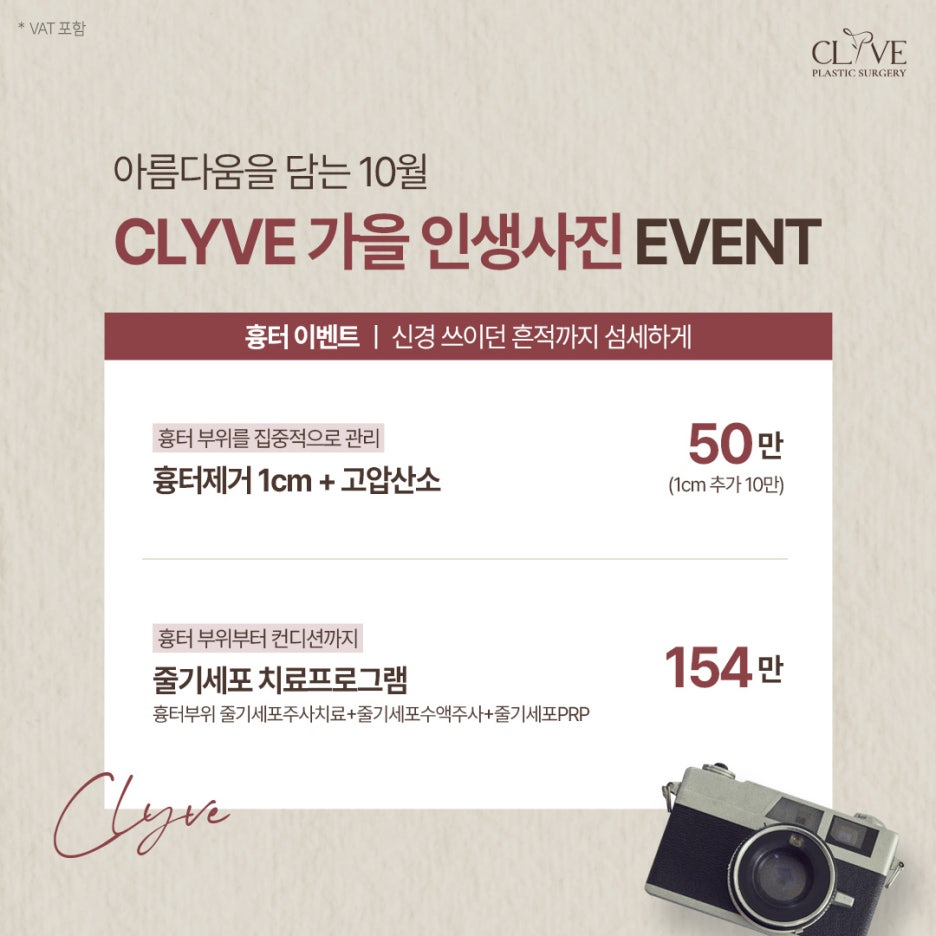
The surgical method and extent depend on the scar's location, size,
and skin condition.
Having surgery doesn't mean the scar mark
disappears right away.
Even after the wound heals, redness
or color changes may remain,
and a new scar takes time to settle
into its final appearance.
In the early stages of recovery, it's important to protect the wound area
and keep it from being irritated.
Hyperbaric oxygen therapy
is also one of the post-surgical care options.
That said, it isn't necessary for everyone,
and whether it applies and what it's used for depends on individual conditions
and the treatment plan.
When looking into information about Nonhyeon Plastic Surgery,
look not only at surgical methods but also at
what kind of care is provided during recovery.
What should you know about stem cell therapy?
As you look into scar treatments,
you may come across stem cell therapy as well.
When searching for information about skin recovery,
you may become interested in it,
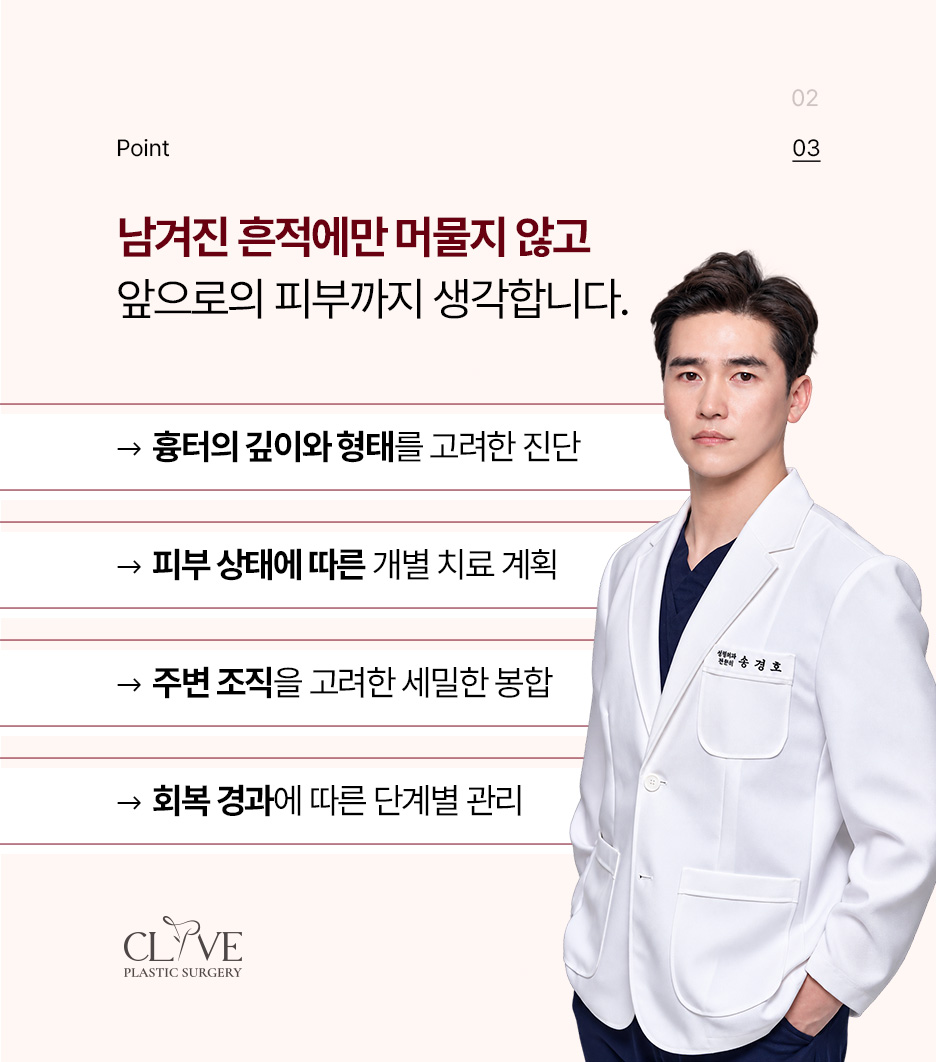
but the fact that it uses stem cells alone
does not mean scars will improve.
The details depend on the method used, its purpose,
and its scope of application, which is why the details vary.
If you are considering scar removal treatment,
it's worth checking how the procedure is carried out,
whether there is evidence supporting its use for scars,
and what results you can realistically expect and what its limits are.
These are worth looking into in detail.
When comparing information from Nonhyeon Plastic Surgery,
rather than focusing only on the name of the treatment,
check the actual treatment details and scope of application.
Consider whether this method is suitable for your scar,
as well as any precautions during treatment
and what side effects may occur. Knowing these
will help you make a decision.
Finding the right approach for your scar
Just because a scar is old,
it doesn't mean everyone gets the same treatment.
Whether it's a sunken scar, a raised scar,
or a scar left from an incision,
the options you can consider will differ.
Scar removal surgery is best decided
after fully understanding the purpose and limits of the treatment,
as well as the changes that may occur during recovery,
so you can make an informed choice.
Please remember that even after treatment, a scar may not fully disappear
and redness or color changes may still remain.
So it's good to keep that in mind.
If a scar is bothering you,
start by finding out the current condition of your scar
and go from there.
Understanding which approach suits your skin
can be the first step in deciding on treatment!













Frequently Asked Questions
Will a scar disappear right away after scar removal surgery?
No. Having surgery does not mean the scar will disappear right away. Even after the wound heals, redness or color changes may remain, and it takes time for a new scar to settle.
What types of scars are there?
Scars can be divided into sunken scars, where the skin has caved in; raised scars, which stand above the skin's surface; and incision scars, which remain as thin lines after surgery or injury. Even scars of the same size can differ in depth and in the condition of the surrounding tissue.
What kind of care is needed during recovery after scar removal surgery?
In the early stages of recovery, it's important to care for the wound area and keep it from being irritated. Hyperbaric oxygen therapy is one post-surgical care option, but it isn't necessary for everyone. Whether it applies depends on individual conditions and the treatment plan.
Does stem cell therapy improve scars?
The mere fact that stem cells are used does not mean scars will improve. Details vary depending on the method, purpose, and scope of application, so it's worth checking how the treatment is performed and whether there is evidence supporting its use for scars.
What should you check before scar treatment?
It's best to look at the location and depth of the scar as well as how it differs from the surrounding skin. The surgical options you can consider may vary depending on the shape of the scar, and it's advisable to decide only after understanding the purpose and limits of the treatment and the changes that may occur during recovery.
Clinic Info
Details
- 서울 강남구 도산대로 121 YK타워 5·6층
- 02-6212-8080
- Mon-Fri 10:00-19:00Sat 10:00-17:00 Closed days calendar ›
- Director 송경호
- clyveps.com