2026-10-26
Which Faces Need a Cheekbone Lift, Mouth Corner Lift, or Midface Lift?
Explains how midface sagging below the eyes can make the face look longer, and which lift, cheekbone, mouth corner, or midface, may suit your concerns.

Which Faces Need a Cheekbone Lift, Mouth Corner Lift, or Midface Lift?

You may not notice much difference when you look in the mirror,
but in photos, your face sometimes looks longer than before.
Especially if, at some point, your front cheeks seem to have dropped or your nasolabial folds look deeper,
you may start to wonder, “Has my face started to sag?”
These changes aren't always caused by wrinkles forming on the skin alone.
Beyond the skin, the position of the tissues and fat underneath,
along with facial shape, can all play a role together.
Today, we'll focus on the facial changes that can appear when the midface sags.
Has your face started to look longer?
When people think of facial sagging, the jawline is usually the first thing that comes to mind.
However, the midface, which extends from below the eyes to the cheeks and around the nasolabial folds,
can also change and make the whole face look different from before.
Over time, as the skin and soft tissue shift position, the front cheeks
may look like they've dropped, and the nasolabial folds may appear more pronounced than before.
So if your face looks longer than before, rather than looking only at the jawline,
it's worth checking how your midface has changed as well.

So, where exactly is the midface?
The term may sound a little unfamiliar.
Simply put, the midface is the central part of the face, extending from below the eyes through the cheekbones and front cheeks
down to the area around the mouth.
This area stretches from under the eyes to the cheeks and around the nasolabial folds, so it's hard to look at any one spot in isolation.
A change in the position of the front cheeks may make the nasolabial folds more noticeable,
and changes in the shape of the cheekbones and cheeks may make the facial contour feel different from before.
Of course, facial shape, skin elasticity, and fat distribution vary from person to person,
so even the same midface sagging can look different in each individual.
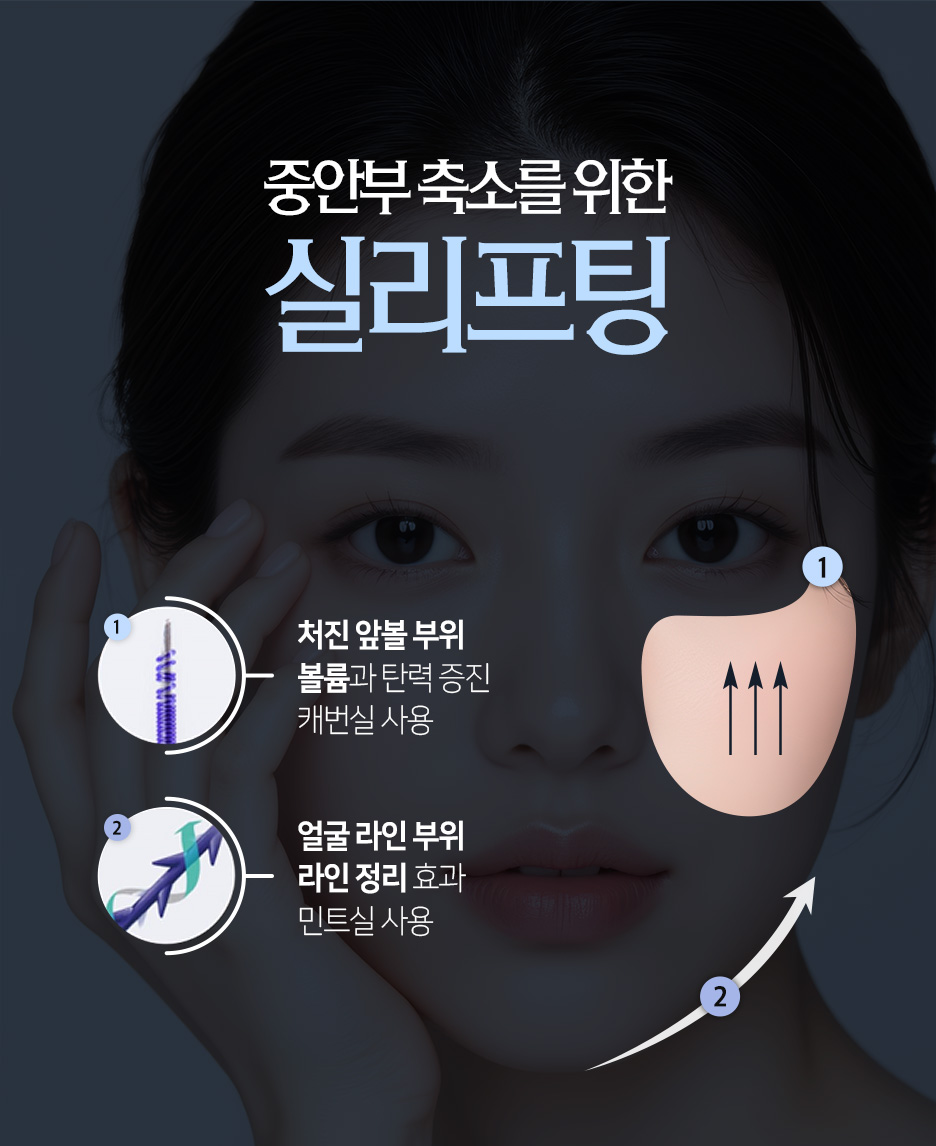
Thread lifting isn't just about pulling skin tight
When people hear “thread lift,” they usually picture threads being inserted to pull up the skin.
In practice, however, the first thing to examine is which area is sagging.
Rather than approaching the front cheeks and facial contour the same way,
they can be assessed with different thread types or placements depending on the condition of the skin and tissues.
A cheekbone lift also isn't just about looking at the cheekbone area in isolation.
You need to look at how the front cheeks, nasolabial folds, and facial contour connect
in order to determine the approach that suits your concerns.
So rather than simply comparing the number or type of threads,
it's worth checking which areas of your face the approach is focused on.
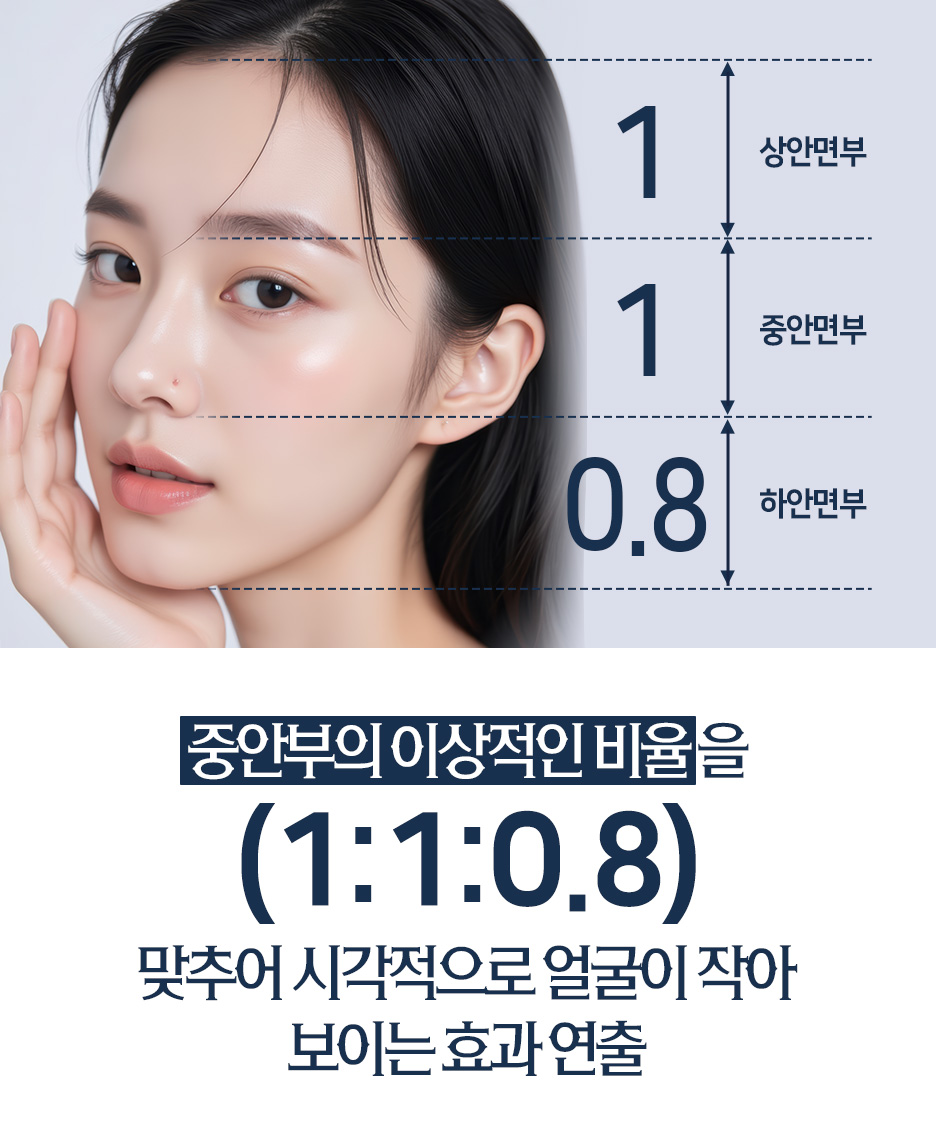
Looking only at the cheekbones can mean missing something
Just because the nasolabial folds are visible doesn't mean you should look only at the folds,
and if the cheekbones bother you, looking only at the cheekbones isn't quite the right approach either.
This is because the midface, which runs from below the eyes to the cheeks,
and the surrounding facial contours are all connected to one another.
That's why, when considering a cheekbone lift, you look not only at how deep the nasolabial folds are,
but also at the overall facial proportions and tissue condition.
In particular, facial proportions vary from person to person, so rather than aiming for a fixed number as a benchmark,
it's more important to see which features of your face look relatively more prominent.

“At what age should I start getting one?”
This is one of the questions people considering thread lifts ask most often.
However, it's difficult to determine the right timing for a lift by age alone.
In your 20s and 30s, concerns may center on skin elasticity or early sagging,
while as we get older, changes can appear not only in the skin but also in the subcutaneous tissue,
fat, and facial bone structure too.
So even if you're considering the same cheekbone lift, the areas to examine can vary depending on your age
and the condition of your face.
Rather than first looking at how old you are,
the first step is to consider which changes in your face bother you most right now.
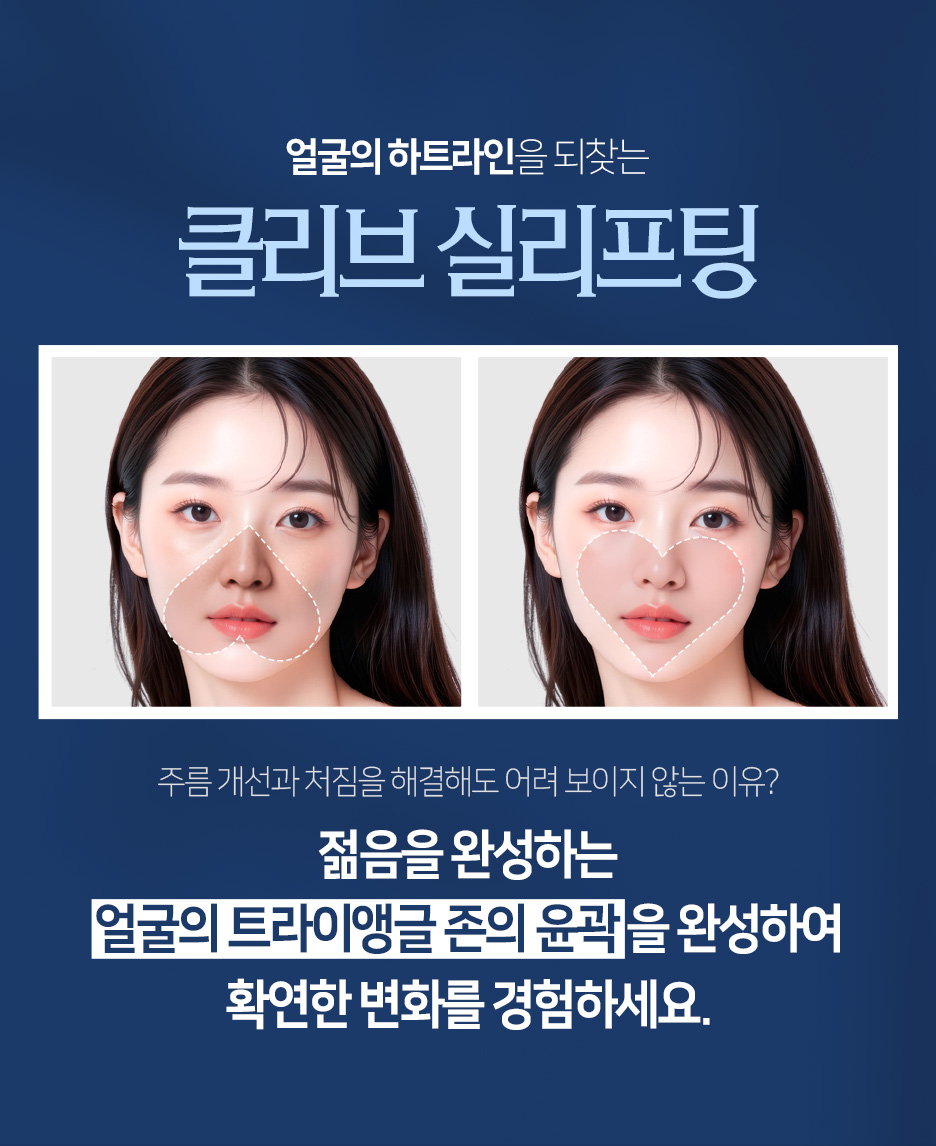
If nasolabial folds are your concern, is it enough to look only at the folds?
Not necessarily.
If the nasolabial folds stand out because of midface sagging,
it's necessary to look at the position of the front cheeks and the surrounding tissues, not just the folds themselves.
Conversely, if the area around the mouth or the direction of the mouth corners bothers you most, you should also check for sagging in that area.
A mouth corner lift is also best approached not as a simple matter of pulling up the corners of the mouth,
but by considering how the surrounding tissues and facial contour relate to one another.
Ultimately, even if the ‘sagging’ looks similar,
the areas to examine can differ depending on where the change started.
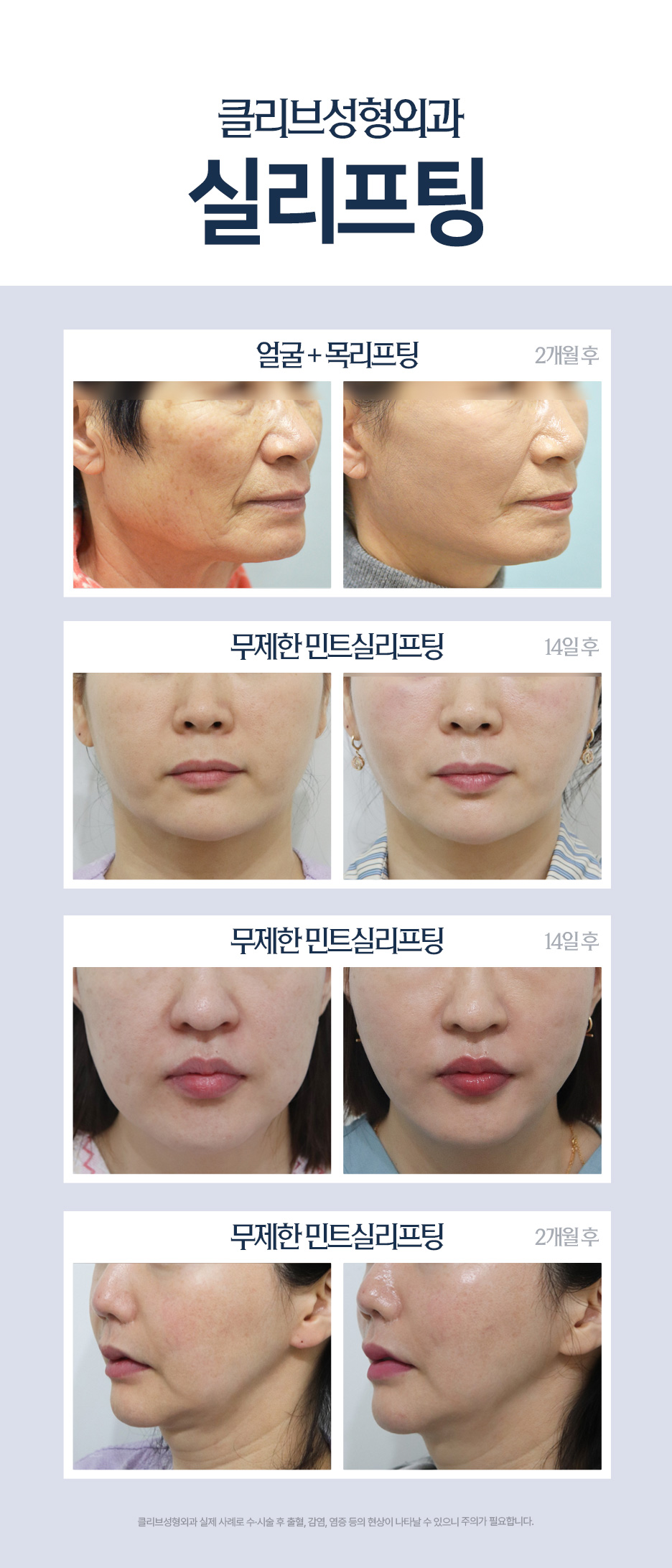
When looking at before-and-after photos, it helps to keep one thing in mind.
When you look at real before-and-after photos, even for the same thread lift, the treated area, the procedure method,
and the timing of follow-up checks may vary slightly.
This means the concerns people have can also differ depending on facial shape, skin, and tissue condition.
So rather than looking at someone else's photos and applying them directly to your own face,
it's better to use them as a reference for figuring out which areas bother you most.
Before-and-after photos can also look different depending on when, from what angle, and with what facial expression they were taken.

So which lift should you look into?
If changes around the front cheeks or cheekbones bother you, consider a cheekbone lift,
and if the area around the mouth or mouth corners is your concern, a mouth corner lift may be worth exploring.
If you're concerned about sagging in the midface, which extends from under the eyes to the cheekbones and front cheeks,
a midface lift may also be worth considering.
That said, even when sagging looks similar, the actual condition of each face differs from person to person.
Rather than settling on a particular procedure from the start,
begin by looking at what has changed in your face
and which area bothers you most.
That's a good place to start when you're considering a lift!












Frequently Asked Questions
Should I only look at my jawline if my face looks longer?
Not necessarily. It's also important to check for changes in the midface, which extends from below the eyes to the cheeks and around the nasolabial folds.
Which exact area does the midface refer to?
It refers to the central part of the face, extending from below the eyes through the cheekbones and front cheeks to the area around the mouth. Because it connects from under the eyes to the cheeks and around the nasolabial folds, it's hard to look at any single spot in isolation.
Does a thread lift simply pull the skin with threads?
No, it isn't only about pulling with threads. The first step is to identify which area is sagging, and then the type of thread and its placement can be assessed based on the condition of the skin and tissues.
At what age should I start getting a lift?
The right timing can't be determined by age alone. In your 20s and 30s, the main concerns may be skin elasticity or early sagging. As we get older, changes in the subcutaneous tissue, fat, and facial bone structure may also appear, so the areas to consider vary depending on age and facial condition.
If nasolabial folds are my concern, should I only look at the folds?
Not necessarily. If the nasolabial folds are related to midface sagging, it's necessary to look at the position of the front cheeks and the surrounding tissues, rather than the folds alone.
How should I use before-and-after photos as a reference?
It's best to treat other people's before-and-after photos as a general reference rather than applying them directly to your own face. Results can differ depending on the treated area, the procedure, and the follow-up timing, as well as the photo's timing, angle, and facial expression.
Clinic Info
Details
- 서울 강남구 도산대로 121 YK타워 5·6층
- 02-6212-8080
- Mon-Fri 10:00-19:00Sat 10:00-17:00 Closed days calendar ›
- Director 송경호
- clyveps.com